
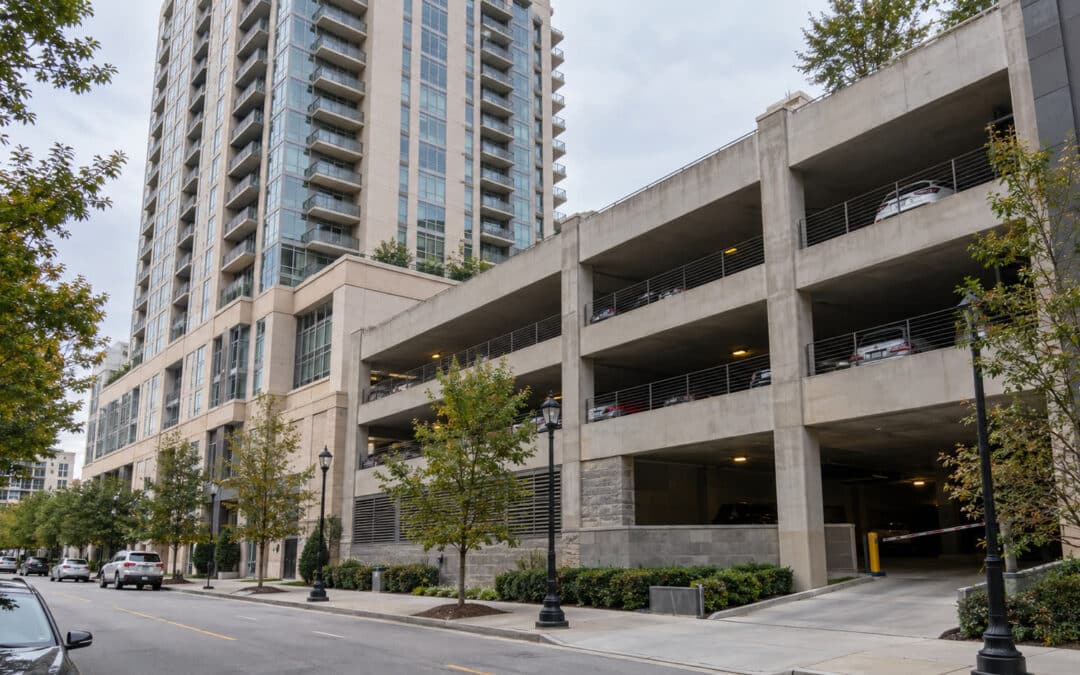
Injured in a Buckhead Apartment Building or Parking Garage? Who May Be Responsible
Reviewed by Bethany Schneider, Founder, Schneider Injury Law | Updated October 14, 2026
Claim Your Free Consultation Today!
Buckhead is one of Atlanta’s most recognizable neighborhoods — upscale high-rises, luxury apartment complexes, and multi-level parking structures that serve thousands of residents and visitors every day. But a polished address does not guarantee a safe one.
Slip and falls in parking garages. Criminal attacks in dimly lit stairwells. Elevator malfunctions. Broken handrails on exterior walkways. These are not rare events — and when they happen, the question of who is legally responsible is rarely simple.
If you were hurt in a Buckhead apartment building or parking garage, Georgia law may give you the right to pursue compensation. This article explains how premises liability works, who may be responsible, and what steps matter most after an injury.
What Is Premises Liability Under Georgia Law?
Premises liability is the legal doctrine that holds property owners and occupiers responsible for injuries caused by unsafe conditions on their property.
Georgia law requires property owners to exercise ordinary care to keep their premises — and the areas surrounding them — reasonably safe for people who are lawfully on the property. That duty extends beyond the front door. Parking garages, sidewalks, entryways, and common areas can all fall within the scope of a property owner’s legal responsibility.
To bring a successful premises liability claim in Georgia, an injured person generally must show:
-
The property owner or occupier had a duty of care;
-
A hazardous condition existed on the property;
-
The owner knew — or reasonably should have known — about the condition; and
-
That condition caused the injury and resulting damages.
Common Causes of Injuries in Buckhead Apartment Buildings and Parking Garages
Injuries in residential buildings and parking structures can range from minor to life-altering. Common scenarios include:
-
Slip and fall accidents caused by wet floors, uneven pavement, poor drainage, or unmarked hazards in stairwells and garage ramps
-
Elevator and escalator malfunctions resulting in falls, entrapment, or sudden drops
-
Broken or missing handrails on stairways, balconies, or walkways
-
Inadequate lighting in parking decks, hallways, or exterior areas
-
Criminal attacks — assaults, robberies, or sexual assaults — in areas where security was inadequate
-
Falling objects or structural failures in aging or poorly maintained buildings
-
Carbon monoxide or fire hazards from defective building systems
Injuries from these incidents can include broken bones, traumatic brain injuries, spinal cord damage, lacerations, and in the most serious cases, permanent disability or wrongful death.
Who May Be Legally Responsible?
One of the most important — and often misunderstood — aspects of a Buckhead premises liability case is that multiple parties may share responsibility. Identifying all of them matters.
For example, an apartment resident may be injured in a parking deck that also serves shops or restaurants in the same Buckhead development. The apartment management company may handle residential common areas, while a separate company operates the garage. Determining who controlled the area where the injury occurred—and who was responsible for inspecting, maintaining, or repairing it—helps identify who may be legally responsible.
The Property Owner
Landlords have a legal duty to maintain rental property in a reasonably safe condition. If the building owner knew about a dangerous condition and failed to fix it — or should have discovered it through reasonable inspection — they may bear significant legal responsibility.
The Property Management Company
Many Buckhead apartment complexes are owned by one entity and managed by another. Property management companies that control day-to-day maintenance, security protocols, and common area upkeep can be independently liable for negligence in those areas.
Third-Party Contractors
Maintenance companies, elevator service contractors, cleaning crews, and security firms hired to service the property may also bear responsibility if their work — or failure to work — contributed to the dangerous condition.
The Parking Garage Operator
Parking structures in Buckhead are sometimes operated by companies separate from the building owner. If a garage operator controls lighting, security cameras, staffing, or structural maintenance, they may be a responsible party in their own right.
Negligent Security: A Critical Issue in Buckhead Injury Cases
Criminal attacks in apartment buildings and parking garages are among the most serious — and legally complex — premises liability claims.
If you were attacked in a Buckhead parking garage or apartment common area, the history of crime at that location, the adequacy of lighting and security cameras, staffing levels, and the property owner’s prior knowledge are all potentially relevant facts.
Georgia’s Shared Fault Rule
Georgia follows a modified comparative fault system. If you are found to share some responsibility for your own injury, your compensation may be reduced proportionally. If you are found 50 percent or more at fault, you generally cannot recover damages at all.
This is why how a claim is investigated and presented matters. Property owners and their insurers often look for ways to shift blame onto the injured person. Having a thorough, well-documented account of what happened — and what the property owner knew — can make a significant difference.
What to Do After an Injury in a Buckhead Building or Garage
The steps you take in the days immediately following an injury can affect your ability to pursue a claim:
-
Seek medical attention immediately — even if you feel the injury is minor. Adrenaline can mask serious trauma, and a prompt medical record connects your injuries to the incident.
-
Report the incident to building management or the garage operator and request a written copy of any incident report.
-
Document the scene — photograph the hazard, the lighting conditions, any missing signage, and your injuries before anything is repaired or altered.
-
Identify witnesses and preserve their contact information.
-
Preserve all communications — save any emails, texts, or letters from the property owner, management company, or their insurer.
-
Do not give a recorded statement to any insurance company before speaking with an attorney.
Security footage may be overwritten quickly. Ask an attorney promptly about preserving video, incident reports, and maintenance records.
Frequently Asked Questions
Can I sue my apartment complex if I was injured in a common area? Possibly. If the injury resulted from a hazardous condition that the property owner or manager knew about — or should have known about — and failed to address, Georgia law may support a premises liability claim. The specific facts of your situation matter significantly.
Can I sue my apartment complex if I was attacked in a Buckhead parking garage? Possibly. A criminal attack does not automatically make the property owner liable. Georgia law imposes specific requirements for negligent security claims. An attorney can review the incident, the property’s condition, and what the owner knew to determine whether you may have a claim.
How long do I have to file a premises liability claim in Georgia? Georgia’s personal injury statute of limitations is generally two years from the date of injury. Certain circumstances — such as claims involving government-owned property — may require earlier action. Do not wait to seek legal guidance.
What if I was a visitor, not a tenant? Your status as a guest rather than a resident does not eliminate the property owner’s responsibility.
Speak With a Buckhead Premises Liability Attorney
Schneider Injury Law is a boutique Atlanta trial firm that handles serious premises liability cases throughout Georgia. Founder Bethany Schneider spent nearly a decade at King & Spalding — one of the country’s most prominent defense firms — where she attended 24 multi-million dollar trials and served as trial counsel in 11 of them. She knows how property owners and their insurers build their defenses, and she uses that knowledge to advocate for the people on the other side.
Since 2018, the firm has recovered more than $80 million for injured clients across Georgia. Consultations are free, with no retainer and no fee unless we win.
Claim Your Free Consultation Today!
Disclaimer: This article is for informational and educational purposes only and does not constitute formal legal advice. Reading this article does not create an attorney-client relationship. No formal representation is formed until a written agreement is executed. Every case involves unique facts and circumstances. Please consult a licensed Georgia premises liability attorney about the specific details and deadlines that apply to your situation.