
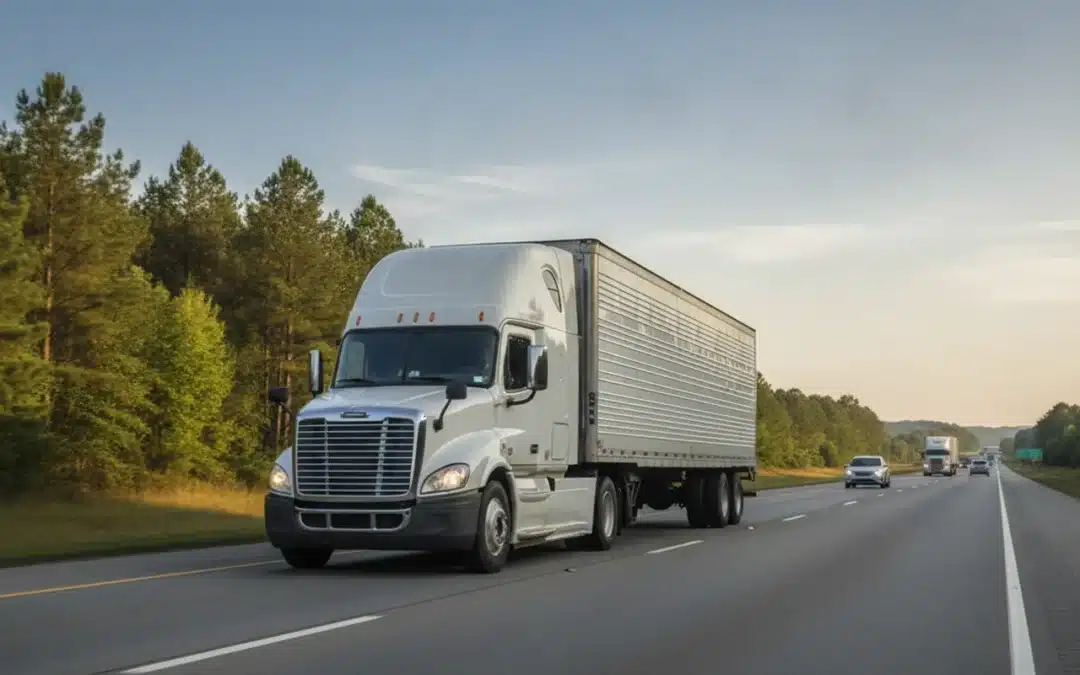
After a serious truck crash, a family often wants to know what the driver was told to do before the collision. A trucking accident attorney may look at dispatch records for that answer, because those records can show the assignment, a later route change, or a reported equipment concern. Write down the carrier name, truck description, location, and time while they are still fresh. Keep original messages and photographs, and label anything you are not sure about.
Call to discuss your next steps
Why can dispatch records help reconstruct the trip?
Dispatch is the running conversation about a trip. It can include a message assigning a load, a call changing the next stop, or a note that the driver reported a problem with the truck. Read together, those entries can show how the trip changed between pickup and the crash.
Three kinds of entries usually do that work. A delivery instruction can put the truck on a particular road at a particular time. A route change can explain a turn away from the first planned path. An equipment note can show a reported problem and the instruction that followed it.
Which dispatch records are worth identifying?
The useful records are the ones tied to this trip, not a general file of everything a carrier keeps. A focused list is easier to preserve and easier to compare with the crash location. These categories are examples to discuss, not a claim that every company stores them the same way.
- Assignment and delivery instructions: the original trip sheet, the named pickup and delivery, the load identifier, and any message that changed a stop or a deadline.
- Route changes: directions to use or avoid a road, notes about a closure, and updates that moved the truck from the first planned path.
- Equipment concerns: the driver’s report of a warning light, tire, brake, or cargo problem, plus the reply telling the driver what to do next.
- Timing entries: arrival, departure, check-in, and delay notes that can be lined up with the crash time.
- People and companies: the assigned driver, the carrier named on the message, and any broker, shipper, or shop mentioned in the exchange.
- Messages after the crash: the first notice to a dispatcher or safety contact, if that message exists and can legally be requested.
A Georgia truck accident lawyer can match this list to the names and photographs you already have.
What belongs in a preservation request?
A preservation request should describe the crash and name the dispatch categories tied to that trip. The wording and the recipients should be chosen with a lawyer. These details usually make the event easier to find. Give the date, approximate time, road or highway, and direction of travel.
Describe the truck and trailer, including company names, numbers, and plates you actually saw. Name the load, pickup, delivery, or claim number if you have one. Ask that assignment messages, route changes, equipment reports, and replies be kept in their original form. Ask for one contact who can receive a follow-up, and keep the sent request with any reply.
Keep the request tied to known facts. If you do not know which messaging system the company uses, describe the records you want preserved in ordinary language. If a reply says a search found nothing, save that reply with the request. A response saying no records were found does not necessarily establish that no messages existed. Your attorney can review what was searched and whether further follow-up is needed.
Send the request in a form you can keep, such as an email or a letter, and save the sent copy with the date. A phone call can still be useful, but write down who you spoke with, when, and what that person said would be kept. Do not send original photographs or the only copy of a message. A copy is enough until a lawyer says otherwise.
How can a delivery instruction, route change, or equipment note be read?
Start with the last instruction before the crash, then read backward. The point is to rebuild the sequence, not to treat one message as the whole story. A short table shows how three common entries can be used.
| Dispatch entry. | Compare it with. | What it may clarify. |
|---|---|---|
| Delivery instruction. | Crash time and place. | Why the truck used that road. |
| Route change. | The earlier planned path. | Whether the path changed. |
| Equipment concern. | The reply that followed. | The report and next order. |
| Delay or check-in. | Reported crash time. | Where the trip stood. |
Here is a delivery example. The trip sheet says to pick up in Atlanta and deliver in Augusta by 6 a.m. At 1 a.m., dispatch messages the driver to add a drop in Covington and then continue. If the crash happens on the road toward Covington, the added stop can explain the new direction. The messages can help establish when the route changed and whether the driver had reached the added stop before the crash.
Here is a route-change example. The driver is told to leave the interstate at a named exit and use a state route around a closure. A later pin, toll record, or witness account may show the truck still on the interstate. Preserving both the instruction and the location record lets someone compare the direction with the path actually driven.
Here is an equipment example. The driver reports a hot wheel or a soft brake and asks whether to stop. Dispatch replies to finish the delivery and have the trailer checked afterward. Preserving both the report and the reply shows the concern and the instruction that came next. It does not, by itself, prove that the reported problem caused the crash.
A fourth comparison is a delay note. The driver checks in from a Georgia truck stop and says traffic has added an hour. Dispatch answers with a new delivery time. If the crash is reported twenty minutes later, those messages can help establish the driver’s reported location and revised schedule shortly before the crash.
Read each example against something outside the dispatch file. A photograph of the road, a witness account, a police diagram, or a vehicle-data point can support or contradict the message. When they differ, keep both. The difference is part of the reconstruction, not a reason to discard the message that feels inconvenient.
An attorney may also compare dispatch messages with the driver’s duty-status records, which document driving and other work periods. These records serve different purposes: a dispatch message may show a new delivery instruction, while a duty-status entry may help establish the timeline. Reviewing them together can help identify gaps or inconsistencies that need further investigation.
Who may have the dispatch history?
The name on the truck door is the first lead, not a full list of custodians. The motor carrier may hold the driver’s messages. A broker may have sent the load tender. A shipper or warehouse may have its own arrival record. A repair shop may have the equipment complaint that was reported on the road.
Save the names as they appear on the bill of lading, a rate sheet, a claim email, or a photograph. Keep the original document or photograph, even if a company name or logo is difficult to read. A lawyer can compare those names and decide who should receive a request. Separate the driver, the carrier, the truck owner, the broker, and the shipper before deciding what each one may hold.
A broker’s email may say only that a load was tendered. The carrier’s message may be the one that changed the route or answered an equipment complaint. The shipper’s gate log may show when the trailer arrived, not what the driver was told on the highway. Ask each company for the record that matches its role, rather than for every file it keeps.
What should you keep from your own file?
The information you already have can help your attorney identify the truck, companies, and trip involved. Keep the crash location, the visible company names, and any number you could read on the truck or trailer. Save photographs in their original files, and keep claim emails, texts, and letters without editing them.
One simple timeline is enough. Note the date you learned each fact and whether you saw it or someone else reported it. Mark unknown items as unknown. Add a new line when a better document arrives, rather than rewriting the older note.
Bring that file to the first meeting. The guide to evaluating truck accident counsel covers questions about who will handle the case and how the facts will be prepared. For dispatch, ask which entries matter, who may have them, and whether a preservation request should go out now.
What should you ask a trucking accident attorney?
You do not need a finished investigation before the conversation. Bring the timeline, the names, and the messages you already saved. These questions keep the meeting on the trip record.
- Which delivery instructions, route changes, or equipment notes could matter here?
- Which company may hold each one, and which name is still missing?
- Should a preservation request go out now, and who should send it?
- How will the original message be kept separate from a later summary?
- What other proof, such as vehicle data or witness accounts, should be read beside the dispatch file?
Schneider Injury Law is an Atlanta trial firm that represents seriously injured people throughout Georgia. Consultations are free, there is no retainer, and there is no fee until recovery. You can review Bethany Schneider’s professional background and the firm’s documented case results before you call. A result in another case does not predict the result in yours.
Frequently asked questions
How soon should dispatch records be preserved?
Ask soon after the crash, once immediate medical needs are handled. Message systems can overwrite older entries on different schedules, so there is no single number of days that fits every company. A lawyer can decide whether a preservation request is useful for the records tied to this trip.
Can I request records directly from a trucking company?
Yes. You may ask a carrier, broker, or shipper to keep or share trip records, and you should keep a copy of whatever you send. A direct request does not require the company to produce the file. Formal legal process may still be needed, so consider getting advice before you send a detailed demand or a recorded statement.
What if I do not know the carrier’s legal name?
Keep the exact words you saw on the door, trailer, bill, or claim email, even if they look like a brand rather than a legal name. A photograph, truck number, or plate can help identify the company behind that brand. Do not assume the painted name is the only entity that arranged the trip.
Do dispatch records prove that a trucking company caused a crash?
No. A dispatch record can show an instruction, a route change, or a reported concern. Responsibility depends on the complete evidence and the law that applies to the crash. Use the record to reconstruct the trip, then have the rest of the proof reviewed with it.
This article is general information, not legal advice. Reading it does not create an attorney-client relationship. A lawyer can apply these ideas to the facts and timing of a particular crash.