
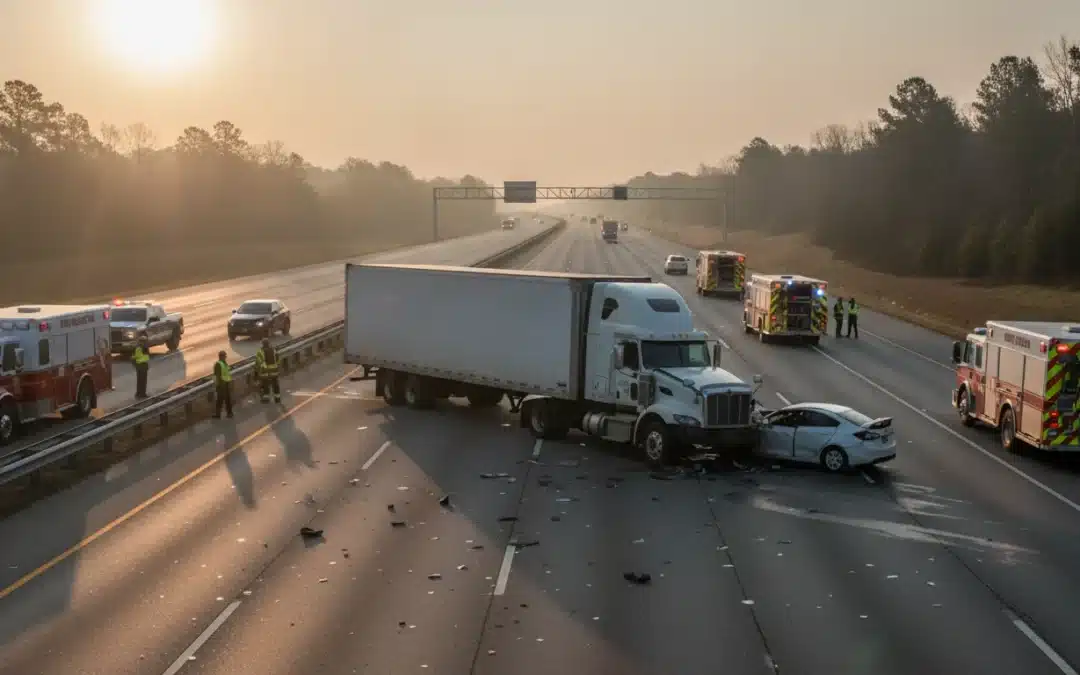
After an underride crash, a family may be facing serious injuries. Medical decisions may come first. Some questions cannot be answered from visible damage alone. If it is safe to do so, preserve photographs, witness information, the crash report, and identifying details for the truck and trailer. Never return to a roadway or damaged vehicle to collect evidence.
An underride truck accident lawyer georgia families trust can help preserve evidence and investigate what happened. Legal guidance should be tailored to the crash, the injuries, and the available records. The National Highway Traffic Safety Administration explains that an underride crash occurs when a smaller vehicle slides beneath a larger one. That makes the trailer’s guard, lighting, vehicle positions, and other physical evidence especially important. NHTSA research addresses the characteristics and contributing factors of these crashes.
Call 404-800-3060 for a free consultation
All consultations are free, with no retainers or upfront fees. You can also request a free consultation online. First, it helps to understand why an underride crash presents different documentation and investigation concerns for Georgia families.
What Makes an Underride Crash Different for Georgia Families?
An underride crash is not simply a rear-end collision involving a truck. The size and height difference between a passenger vehicle and a trailer can change how the vehicles interact. In a rear underride crash, a car strikes the back of a large trailer or semitrailer and slides underneath it.
A side underride crash involves a vehicle moving beneath the side of a trailer, such as when a truck is crossing or turning through traffic. The direction of impact, trailer equipment, lighting, roadway layout, and available vehicle evidence may all matter.
The National Highway Traffic Safety Administration describes underride events as an active area of crashworthiness research, including the characteristics of these crashes and their contributing factors. NHTSA has also reported research and rulemaking related to rear impact guards, while separately studying the effectiveness and feasibility of side underride guards. Those distinctions matter because a rear guard and the trailer’s side structure raise different questions during an investigation. NHTSA’s truck-underride research provides useful background on these issues.
Why the physical evidence can tell a different story
Underride investigations often require close attention to the points of contact, the position and condition of the trailer. The passenger vehicle’s damage, roadway marks, photographs, and the truck’s identifying information. A federal regulation generally addresses rear impact guards on qualifying trailers and semitrailers, with exceptions and requirements that depend on the vehicle and its manufacture.
NHTSA’s compliance testing includes guard inspection, strength testing, energy-absorption testing, ground-clearance measurement, and photographic documentation. That does not establish fault by itself. It shows why photographs and preserved vehicle evidence may be important to a qualified investigation.
Families should not return to a roadway or damaged vehicle to gather evidence. If photographs or records already exist, preserve the original files and do not alter them. Law enforcement reports, witness information, vehicle photographs, and available truck details may help counsel identify what additional records should be requested. NHTSA has recommended improving state crash-data collection so rear and side underride events can be identified more consistently.
This section is intentionally narrower than a general truck-crash evidence guide. It focuses on the physical features that make an underride event distinct, not on assuming that a driver, carrier, manufacturer, or another party was responsible. Bethany Schneider, founder and trial attorney, can review the available facts and explain what questions may require further investigation.
What Can You Safely Document at the Crash Scene?
After an underride crash, safety and medical care come before evidence. A family member may be able to preserve useful information, but no photograph or detail is worth entering traffic, approaching an unstable truck, or delaying emergency treatment. If the scene is dangerous, leave the investigation to first responders and later investigators.
- Get emergency help and follow medical guidance. Call 911, cooperate with paramedics, and make sure injured people receive prompt evaluation. Ask for the names of hospitals or facilities involved and keep discharge papers, treatment instructions, prescriptions, and appointment information. Symptoms can change after a serious collision, so do not minimize an injury because it is not immediately obvious.
- Take photographs only from a safe location. If you can do so without entering traffic or walking toward damaged vehicles, photograph the roadway. Lane positions, weather or lighting conditions, visible debris, traffic controls, vehicle damage, and the truck’s rear or side. Do not climb into a vehicle, stand between vehicles, cross active lanes, or return after leaving. NHTSA’s underride research materials recognize photographic documentation as part of crash and equipment investigation, but that work should not put a family member at risk.
- Identify witnesses without confronting anyone. If people nearby offer information, record their names and phone numbers, or ask another safe adult to do so. Note where each witness was standing or driving, but do not pressure anyone to describe fault or argue about what happened. Police may also collect witness information in the official investigation.
- Write down basic report details. When available, save the responding agency, incident or report number, officer names, and the date, time, and location of the collision. NHTSA has recommended improving the collection of underride information in state crash-data systems. So tell responding officials what you observed without guessing about the legal cause of the crash.
- Record truck identifiers from a safe distance. If visible without approaching the truck, note the company name, trailer markings, license plate, and USDOT number. A partial identifier, a photograph taken from a safe position, or a witness’s description may still help later. Never return to traffic or a damaged vehicle to obtain a clearer image.
- Preserve what already exists. Keep original phone photographs and videos, dashcam files, messages, location history, and posts related to the crash. Do not crop, filter, overwrite, or delete the originals. Send copies to a secure location and avoid posting detailed theories about what happened before the evidence can be reviewed.
These steps preserve leads; they do not determine who is legally responsible. A careful investigation may require records and evidence that a family cannot safely obtain at the scene.
Which Truck, Trailer, and Company Records May Matter?
After an underride crash, the damaged vehicles may tell only part of the story. A formal investigation can seek records showing how the truck and trailer were equipped, maintained, operated, and loaded before the collision. Families should preserve anything they already have, but they should not try to obtain restricted company or electronic records themselves.
Trailer guards, lights, and reflective equipment
For a rear underride investigation, counsel may examine the trailer’s rear impact guard, including its condition, attachment points, dimensions, ground clearance, and damage. Federal regulations generally address rear impact guards on covered trailers and semitrailers, subject to exceptions. The regulation includes requirements concerning the guard’s position and structure. NHTSA’s compliance testing materials also identify guard inspection, strength testing, energy absorption, ground-clearance measurement, and photographic documentation as parts of its test procedure. These rules and procedures provide points for examination. They do not, by themselves, establish that a particular guard caused a crash or that any party was negligent.
Investigators may also look at lighting, reflectors, conspicuity tape, and other visibility equipment. They may compare the equipment’s condition with photographs, inspection records, weather and roadway conditions, and the driver’s account. The relevant question is not simply whether a component existed. It may be whether it was visible, properly positioned, damaged, or functioning at the time of the collision.
Maintenance, electronic, driver, and cargo records
Potentially important records can include:
- Preventive-maintenance schedules, inspection reports, repair invoices, and records of prior problems involving the tractor, trailer, guard, lights, or reflective equipment.
- Electronic control module or event data, onboard camera footage, GPS information, dispatch messages, and other electronic records that may help establish speed, braking, movement, or timing.
- Driver qualification materials, hours-of-service records, electronic logs, training records, dispatch instructions, and post-crash statements.
- Bill-of-lading materials, cargo weights, loading instructions, securement records, and information identifying who selected or loaded the trailer.
- Company records identifying the carrier, vehicle owner, maintenance provider, leasing company, broker, or other entities involved in the trip.
Sources describing truck-crash evidence commonly identify crash reports, photographs, witness statements, electronic data, maintenance records, and company records as potential evidence. Counsel may use formal requests, preservation notices, subpoenas, or other lawful methods to seek materials held by a carrier or third party. If your family has photographs, the police report, repair paperwork, messages, or identifying information, keep the originals and note when and how each item was received. Do not return to a roadway or damaged vehicle to collect evidence.
Who May Need to Be Investigated After an Underride Crash?
An underride crash can involve more than the person behind the wheel of the passenger vehicle or the truck driver. The investigation should follow the evidence, including the condition of the trailer, the way the truck was operated, the loading process, and the history of the equipment. The possibilities below are investigation leads, not proof that any person or company is legally responsible.
| Possible lead | Questions an investigation may examine |
|---|---|
| Truck driver | What did the driver see? When did the driver brake or change direction? Were driving decisions or conditions relevant to the crash sequence? |
| Motor carrier | What company policies, supervision, dispatch information, driver records, and safety practices may help explain how the truck was operated? |
| Vehicle or trailer owner | Who owned or controlled the tractor or trailer, and what inspection, repair, guard, lighting, or reflective-equipment records exist? |
| Broker or shipper | What role did the broker or shipper play in selecting the carrier, arranging transportation, or communicating cargo and route information? |
| Maintenance provider | Who inspected or repaired the truck, trailer, rear impact guard, lights, or related equipment, and what work was performed? |
| Cargo loader | Was the cargo loaded, secured, or distributed in a way that affected the truck’s handling, visibility, or position on the roadway? |
| Parts manufacturer | Did a component such as a guard, lighting system, or other safety-related part perform as designed, subject to the facts and applicable standards? |
Federal rules address rear impact guards on many trailers and semitrailers, with exceptions and vehicle-specific requirements. The applicable records and physical evidence may show whether those requirements are relevant to a particular crash. NHTSA’s compliance testing includes guard inspection, strength, energy absorption, ground-clearance measurement, and photographic documentation. See the federal rear impact guard regulation and NHTSA’s testing procedure.
Responsibility can depend on records and physical evidence that may not remain available indefinitely. Families should preserve what they already have and avoid guessing about fault from a photograph or a company name alone. A Georgia investigation may need to consider several entities while remaining grounded in the specific facts.
When Should You Call an Underride Truck Accident Lawyer in Georgia?
Families do not need to wait until every medical record is collected or every detail is understood before asking for legal guidance. Contacting an underride truck accident lawyer in Georgia soon after a serious crash can help protect evidence while it still exists and give the family a clearer path through the next decisions.
Call early when the injury is serious or the crash was fatal
An underride crash may involve catastrophic injuries, a fatality, extensive vehicle damage, or a long hospital stay. Those circumstances warrant prompt legal review. Important evidence may include crash-scene photographs, the police report, witness information, vehicle damage, and records connected to the truck, trailer, carrier, maintenance, and electronic data. A family should preserve what it already has, but should not return to a roadway or damaged vehicle to take photographs. A lawyer can help identify what should be requested and how it may need to be preserved.
Early review can also matter when the trailer, rear guard, lighting, or other equipment may have changed after the collision. Federal rules address rear impact guards for certain trailers and semitrailers, subject to exceptions, and NHTSA testing materials include inspection, strength, energy-absorption, ground-clearance, and photographic documentation procedures. Those technical questions usually require investigation rather than assumptions about who caused the crash.
Get guidance before speaking in detail with an insurer
Insurance representatives may contact an injured person or family quickly. You should cooperate with reasonable requests for basic information, but do not guess about fault or minimize symptoms. Do not provide a recorded statement, sign a release, or accept a settlement before understanding the medical and legal issues. Keep copies of correspondence and note what was requested. Medical care comes first, and consistent medical documentation can help show the injuries, treatment, limitations, and ongoing needs without requiring a family to explain everything from memory.
Do not rely on a general deadline
Georgia filing periods can depend on the type of claim, the injured person, the defendant, and other circumstances. A general online statement about a two-year period is not a substitute for case-specific legal advice, and waiting can create avoidable evidence problems. Have a Georgia attorney review the facts promptly, especially when a death, a public entity, a minor, or disputed responsibility may be involved.
Schneider Injury Law represents truck-crash victims in Georgia through a boutique, personalized trial practice. Bethany Schneider brings a defense-side background and significant trial experience to serious injury investigations, without treating any outcome as guaranteed. Families can also review the firm’s guide on how to preserve truck crash evidence for related documentation issues.
How Can Families Organize Evidence Without Overwhelming Themselves?
After a serious underride crash, documentation can feel like another responsibility placed on a family that is already trying to manage treatment, transportation, work, and grief. The goal is not to investigate the crash alone. It is to preserve what you already have in a form that helps a lawyer, physician, insurer, or other professional understand the sequence of events.
Create one secure case folder
Use a physical folder, a cloud folder, or both. Add the crash report, exchange-of-information materials, photographs, videos, witness names, tow or impound paperwork, insurance letters, and medical records as they become available. Save original files rather than relying only on screenshots or edited copies. If several family members are helping, designate one person to maintain the folder and record when new material is added.
Build a simple timeline
Write down the date, approximate time, and location of the crash. Then add emergency calls, hospital visits, diagnoses, procedures, follow-up appointments, work absences, insurer contacts, and major changes in daily life. Keep the timeline factual. It can include what a person reported feeling, what a clinician documented, and what a family member observed. It should not try to decide who was at fault.
Separate evidence from questions
Create a second list of questions for counsel. Examples include whether the trailer’s rear guard or lighting can be inspected. Whether electronic truck data may exist, which company controlled the vehicle, and whether a witness has additional photographs. Do not contact a trucking company, alter damaged equipment, post detailed crash commentary online, or sign a statement simply because someone requests it. Ask a lawyer how to respond, especially when an insurer or defense representative contacts the family.
For a broader discussion of preserving records in a Georgia 18-wheeler case, see preserve truck crash evidence. This article’s narrower focus is the physical and personal documentation families can safely retain after an underride collision.
Keep copies of every document you provide. If you are unsure whether something matters, preserve it and ask. Early organization cannot prove liability by itself, but it can reduce confusion and help counsel identify the next safe investigative step.
Request a free case evaluation from Schneider Injury Law
Frequently Asked Questions
What should a family preserve after an underride truck crash?
Preserve the crash report, photographs, medical records, discharge instructions, vehicle-insurance information, witness contacts, and every message or letter from an insurer. Keep damaged clothing and personal property if they may help document the impact. Do not return to a roadway or damaged vehicle to collect evidence. A lawyer may also need to seek truck and trailer records that families cannot obtain themselves, including maintenance files, electronic data, driver records, and company documents.
Can a family bring a claim against the truck driver?
Possibly, but the answer depends on the evidence and the crash circumstances. An investigation may examine the driver, motor carrier, vehicle owner, maintenance provider, cargo loader, or equipment manufacturer. A family should not assume that one party is responsible before the available records, physical evidence, and witness accounts are reviewed.
How soon should we speak with a lawyer in Georgia?
It is sensible to seek legal guidance as soon as the family is medically and emotionally able, especially when injuries are catastrophic or someone has died. Early advice can help preserve evidence, organize medical documentation, and handle insurer communications. Georgia filing rules can vary by claim and may include exceptions, so do not wait to ask about the deadline that applies to your circumstances.
How much does a truck-crash lawyer charge in Georgia?
Schneider Injury Law offers a free consultation with no retainer or upfront fee. If the firm accepts a case, the contingency arrangement should be explained clearly before representation begins. The firm’s standard wording is no fee UNTIL we win, meaning legal fees are tied to recovery rather than an upfront payment.
Ready to Discuss Your Georgia Underride Crash?
Organizing records and understanding your options can help your family make informed decisions after a serious crash. To claim a free, education-focused consultation, call Schneider Injury Law at 404-800-3060. There is no fee UNTIL we win, and a consultation does not promise a particular outcome.