
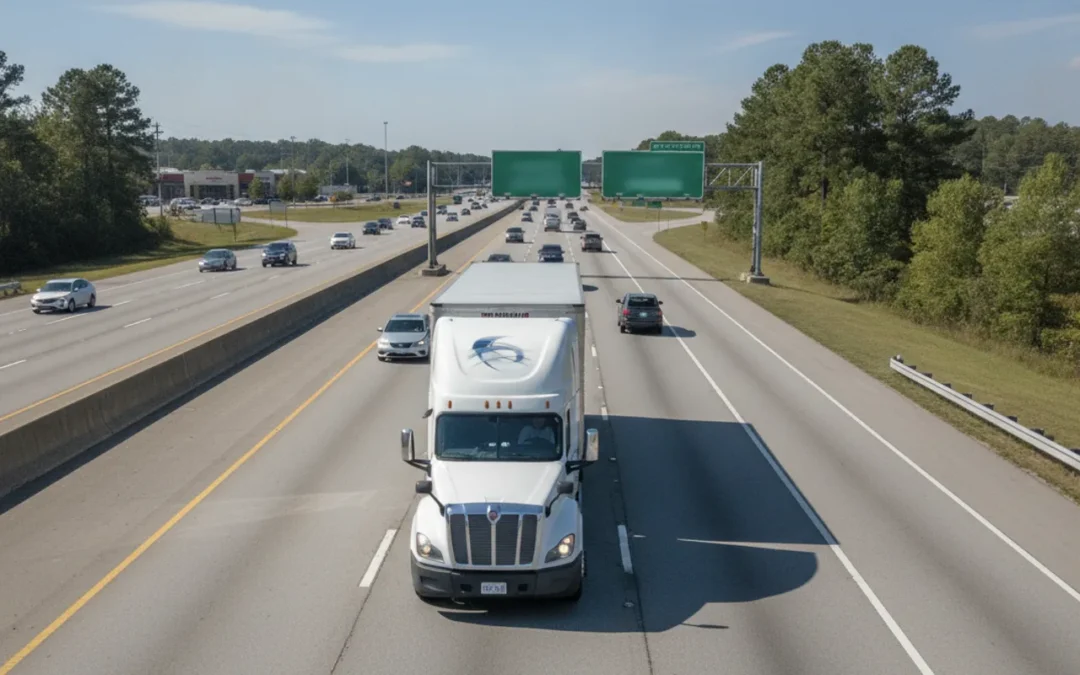
In a straightforward delivery-van collision, photos, the crash report, and medical records may answer the main questions. A disputed tractor-trailer crash may require sorting out conflicting accounts and finding out which companies hold the evidence.
By Schneider Injury Law
What do the two crash examples show?
These examples are illustrations, not predictions about any real case. They show why the same question can have different answers. In both, a lawyer would still need the police report, the vehicles involved, the injuries, and any insurance letters before giving advice about your own crash.
A straightforward collision
Imagine you are driving through Atlanta and a delivery van hits you from behind on a dry surface street. You go to the emergency room and feel sore for a few weeks. The police report names you and the van driver. The van carries one company name, and photos show the rear damage. Nobody claims a brake failed or that another company planned the trip.
A lawyer evaluating your case would read that report and your medical records, then ask whether the soreness resolved. The review is usually limited to who was driving, whose name is on the insurance card, and what treatment the records show. If those facts stay consistent, broad trucking experience may matter less than clear communication and a careful reading of the records you already have.
That point of view matters because the lawyer is looking at your file, not at trucks in general. You can say what the van looked like, where the impact was, and which clinic you visited. The lawyer can then tell you whether anything in those papers is missing.
A simple file can still have a wrong name, an incomplete photo set, or a medical note that does not match what you felt.
A disputed commercial crash
Now imagine a tractor-trailer changes lanes on I-75 and strikes your car. You have a long hospital stay. The truck driver says you moved over first. The trailer has a different company name than the tractor. A broker’s name appears on the trip paperwork, and a maintenance shop serviced the brakes the week before. Witnesses disagree about the lane change, and your family has only a few photos.
A lawyer evaluating your case would need to separate those roles before anyone could say who might be responsible. The motor carrier, the driver’s employer, the vehicle owner, the broker, the shipper, and the shop can each hold different records. A name on the door is a lead, not proof that the company is at fault. That is the kind of case where experience with commercial records can change what gets asked in the first weeks.
If you’re still in the hospital, your family may be able to share the photos and paperwork they have. The lawyer would start with what you saw, what the hospital recorded, and which names appear on the truck, the trailer, and any letter that arrived. The next question is which of those names might have a record, not which name sounds most responsible. Sorting the names first keeps the investigation tied to your crash instead of to a general lecture about trucking.
Photos of the tractor and trailer, a tow receipt, and any letter that arrived can be enough for that first conversation. Your family does not need to decide who is responsible. They only need to keep what they already have and tell the lawyer which names they can read.
When does trucking experience matter?
It matters when the facts look more like the second example than the first. The useful question is which facts would make your case harder to sort out. A single identified driver, limited injuries, and records you already hold can be a simpler file. Disputed fault, serious harm, and records held by several businesses point toward counsel who has worked through those problems before.
Experience is not a logo or the word “trucking” on a website. Ask what the lawyer would investigate in a crash like yours, and who would do that work. A direct answer about the records, the companies, and the disputed facts tells you more than a general promise to fight for you. If the answer skips the facts you described, keep asking or talk with someone else.
Schneider Injury Law is an Atlanta boutique trial firm for seriously injured people and families across Georgia. For an overview of that work, see the Georgia truck accident lawyer page. It is a starting point, not a decision about whether your crash needs that focus. The page explains the firm’s trucking work. This article is about how to tell a simpler file from a harder one.
What would a lawyer investigate in each case?
The first case usually starts with what you can already gather. The second case often starts with records someone else controls. A lawyer can pursue those records through the proper legal process. You should not try to log in to a company system, repair a suspect part, or throw away a damaged vehicle before someone has looked at it.
| Fact to notice. | Straightforward crash. | Disputed commercial crash. |
|---|---|---|
| Who was involved. | Two drivers and one identified company. | Carrier, owner, broker, or shop. |
| What is disputed. | Mostly the damage and soreness. | Lanes, brakes, or trip control. |
| Where records sit. | Your photos, report, and notes. | Logs, trip papers, and shop files. |
| What experience helps. | A clear review of your file. | Knowing who may hold each file. |
In the straightforward crash
A lawyer would match the police report to the photos and the repair estimate. The medical notes should be read against what you remember about the soreness, without adding symptoms that are not there. If an insurer asks for a recorded statement, the lawyer can explain what that request covers before you answer. That is often the whole investigation when no one is fighting about the lane, the brakes, or a second company.
In the disputed commercial crash
A lawyer would identify each company and ask what it actually did. Ownership, employment, leasing, and dispatch can point to different businesses. The broker’s name on the paperwork is a reason to read the broker’s role, not a reason to assume the broker is liable. The same is true of a shop that serviced the truck. The freight broker liability guide covers that separate question in more detail.
The lawyer would also look for records that can be overwritten. Duty-status logs, messages, and electronic vehicle data may be kept only for a limited time, or replaced in ordinary use. Federal rules require many commercial drivers to record duty status, as explained in the driver record of duty status rule.
A timestamp can show when something was recorded. It does not, by itself, prove why the crash happened. You should not try to pull records from a company system yourself.
Electronic vehicle data, inspection files, and trip documents each have limits. A maintenance entry can show that work was written down. It does not prove the work was adequate or that a defect caused this crash. The firm’s guide to black box data after an 18-wheeler crash explains that one source in more detail. Bring the names you have, and let the consultation decide which record is worth asking about first.
Which facts make a truck crash more complex?
Use the second example as a checklist of facts, not as a label for every truck. Complexity shows up when the story is disputed or when the proof sits with businesses you do not control. These are the facts that usually change the kind of experience worth asking about. You do not need to decide which fact is most important before you call.
- Fault is disputed. The drivers, witnesses, or report do not describe the same movement, so someone has to test those accounts against the physical evidence.
- Several companies appear. Different names on the tractor, trailer, broker sheet, or repair invoice mean each role has to be sorted before blame is assigned.
- Harm is serious or lasting. A long hospitalization, surgery, disability, or death makes the medical and financial record harder to assemble.
- Records can disappear. Logs, messages, and vehicle data may be kept only for a set period or overwritten in ordinary use.
- A mechanical question is open. A brake, tire, or component issue may need the part preserved before it is repaired or scrapped.
Mark the items that match what you already know, and leave the rest blank. One checked item is enough to mention. Several checked items are a reason to ask which one would be examined first. The list is a way to describe your crash, not a score that decides whether you need a particular kind of lawyer.
How should you use a consultation to judge experience?
Bring the facts, not a script. Say where the crash happened, what vehicles were involved, what you know about the companies, how you were hurt, and whether anyone has asked for a statement. Then listen for whether the lawyer’s plan matches those facts. Hiring questions, including how to compare trial readiness, are covered in the firm’s trial counsel guide. This article stays with the facts that make a case more complex.
Ask what the lawyer would investigate first. A useful answer names one fact from your crash, such as the lane dispute, the company names, or the hospital record, and says why that fact comes before the others.
Ask who might have the records you need. Listen for a specific driver, company, or shop, rather than a promise to get everything. The answer should also say which record can wait.
Ask who at the firm would handle that work. You want the name or role of the person who would read the file, request the records, and call you back. A firm name by itself does not answer the question.
Other results do not predict yours, and no lawyer can promise an outcome or a timeline. If you want to know how fees and case expenses work, read the firm’s contingency fee and case expense guide. Ask what a cited verdict or settlement includes, because a dollar figure by itself is an incomplete comparison.
Timing still depends on the claim, and different claims can have different deadlines. Which date applies to you is a legal question, so do not calculate one from this article. The firm’s Georgia truck accident statute of limitations guide is the place for that discussion. Bring the crash date and what you know about the injuries, and ask which deadline might matter.
Call 404-800-3060 to discuss your options
Frequently asked questions
Does every Georgia truck crash need a trucking lawyer?
No. A minor collision with one identified driver, limited injuries, and no real dispute may not need the same investigation as a crash with serious harm and several companies. Describe your facts and ask what the lawyer would look at first. The answer should match the crash you described.
Should I talk to the trucking company’s insurer first?
You can ask the caller to identify the company and put the request in writing. Before you give a recorded statement, sign a release, or accept a payment, consider getting advice about what that request covers. You do not have to answer on the first call.
Does a federal safety rule prove the carrier caused the crash?
No. A rule has to apply to that trip, and the evidence has to show whether it was violated. Even then, someone must connect the violation to this crash. One log, one inspection, or one data point is not the whole record.
This article is general information, not legal advice. Reading it does not create an attorney-client relationship. A lawyer can explain which of these facts matter in your own crash.