
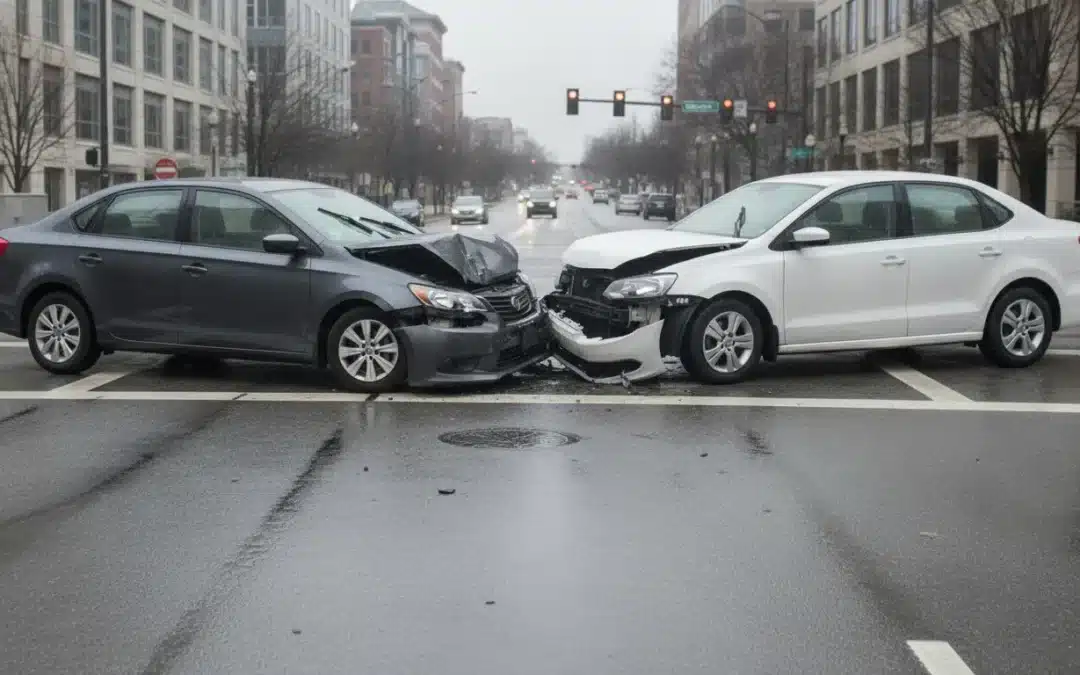
A serious car crash leaves more than a damaged car. Medical bills start, an insurer calls, and you still have to decide who should handle the claim. An auto accident law firm is the team that sorts the insurance file, speaks with the carriers for you, and tells you whether the proof is in place. If you want counsel for that work, start with auto accident representation. Schneider Injury Law is an Atlanta boutique trial firm that takes a limited number of serious injury cases across Georgia, including car crashes, and works on a contingency fee.
Call Schneider Injury Law at 404-800-3060
What an auto accident law firm does after a car accident
The useful question is not what a lawyer’s title means. It is what the firm does with the insurance file. On a serious car accident, the claim work usually falls into five jobs:
- Identify every insurer and the coverage that may apply.
- Handle the adjuster so statements and releases go through counsel.
- Respond to a specific fault finding the insurer has already made.
- Wait until treatment and the records are stable enough to value.
- Decide whether the claim is ready for a number, or still missing proof.
That is different from a scene checklist. What you do in the minutes after the crash is covered in what to do after a car accident. This guide is about the claim after you call. For the firm’s car-crash practice itself, see the car accident lawyers page.
Schneider Injury Law keeps that claim work inside a small team. The firm was founded in 2018. Since then, clients have recovered more than $80 million. A free consultation is the usual first step, in person or by phone, and it is often a 20- to 30-minute conversation that can run longer when the crash is more complex. There is no retainer and no upfront fee. Past results are not a prediction of yours.
Which insurance policies can apply after a crash?
The first insurance job is a list, not a guess. A serious car accident can involve more than the policy on the other driver’s card. The firm reads the declarations pages and asks which policy can actually pay. It does not treat the first carrier that calls as the only one.
Start with the coverages that most often matter, then check whether anyone else was using or owning the car:
- The at-fault driver’s liability coverage, which is the policy people usually name first.
- Your own uninsured or underinsured motorist coverage, when the other limits are too low or unknown.
- A vehicle owner’s separate policy, which may apply if the driver was borrowing or renting the car, depending on that policy’s wording.
- A resident-relative or household policy, which may cover a passenger in some policies and not in others.
- Med-pay or health coverage that pays bills now, which is not the same as the liability claim.
None of those extra policies applies just because a name or an address matches. Eligibility depends on the policy language and the facts, including who owned the car, who lived in the household, and whether the policy excludes that use. Ask the firm to read the page before anyone treats it as coverage.
Limits matter as much as the name on the card. A $25,000 liability policy and a serious hospital stay are not the same problem as a policy with higher limits. Ask the firm which declarations pages it has, which ones are still missing, and whether an umbrella or a second household policy needs a letter. A missing declarations page is a reason to investigate further rather than assume coverage is available.
You do not have to collect every policy yourself. Share the insurance cards, the crash report, and any letter an adjuster already sent. Counsel can request the rest through the proper channels. The Georgia Department of Transportation explains how to request an individual crash report through its crash reporting page. Your job at the start is to get medical care and to hand over what you already have.
How does the firm handle the insurance company?
The other driver’s insurer is not a neutral helper. An adjuster can ask for a recorded statement, a broad medical release, or a signature before the full injury is known. A firm steps in so those requests go through counsel. The firm also notifies the right carriers, tracks deadlines the insurer sets, and keeps a record of what was said.
A recorded statement is a common early ask. The adjuster may frame it as a simple way to “get your side.” It is still a recorded account of fault, speed, injuries, and prior conditions, given before the records are in. Once the firm is retained, that request goes to counsel. You should still get your own medical care and follow your doctors’ instructions.
A medical release needs the same care. A narrow release for the treatment tied to this crash is different from a form that opens years of unrelated records. The firm reads the form before anyone signs it. It also watches for a check that says “full and final” on a stub or in a cover letter. Cashing that check can close a claim that is not ready.
Keep a simple note of every insurer contact while you wait. Write the date, the person’s name, and what they asked you to sign or say. Bring that note to the firm. It shows whether the adjuster is pushing for a quick close or still gathering the same facts you are. You do not need to argue the claim in that notebook. You only need a clear trail.
What happens when the insurer disputes fault?
An insurer can do more than disagree in a phone call. It can send a letter that assigns you a percentage, names a specific act, or denies the claim. The useful next step is a written response to that finding, not a general search for new evidence. Ask the firm to quote the finding back before anyone talks about witnesses, photographs, or medical records.
Start with the document that states the finding. A useful answer names the letter or claim note, the percentage or act it assigns, and the fact the insurer says supports it. If the letter says you turned left, the response addresses that turn. If it says you were speeding, the response addresses speed.
The reply should say whether the firm accepts, disputes, or cannot yet answer that point. Under Georgia law, the court reduces the damages in proportion to the injured person’s percentage of fault. If that person is 50 percent or more responsible for the injury, that person is not entitled to damages. Tell the firm the hard facts in the letter so the reply matches what the insurer actually wrote.
A percentage with no cited fact is not a finished finding. Ask what evidence the insurer is using to support its fault determination, and what the reply will say about that evidence. If the letter does not name a fact, the response can say so. Do not treat a bare percentage as the end of the claim.
Timing still belongs next to that reply. Under Georgia law, a lawsuit for injuries to the person generally must be brought within two years after the right of action accrues. Some claims, including certain claims involving a government vehicle, can have shorter notice rules. Ask the firm to name the deadline that applies to your facts. Do not treat a general two-year statement as a promise that your date is safe.
When is a car crash claim ready for negotiation?
Ready does not mean the adjuster called. It means the firm can explain the number with records a skeptical reader could follow. Several considerations usually come first. Coverage is identified, and fault is supported well enough to discuss. The injury has a treatment picture, including future care if the doctors say it is needed. The losses are written down, not estimated from the first bill.
An early offer can look large and still leave out future care. Before you weigh a number, ask what it includes. Look for medical bills already incurred, future treatment, lost wages, and the human cost of the injury. A dollar figure alone is an incomplete comparison. That is not a promise about your result or how long a case will take.
| Check | Ready | Not ready |
|---|---|---|
| Coverage | Pages for each policy that may pay. | Only the other driver’s card. |
| Adjuster | Counsel reviews new requests. | An insurer’s release still needs review. |
| Fault | The letter’s finding is answered. | A percentage with no cited fact. |
| Injury | Records, plus future care if expected. | Only the emergency-room bill. |
| The number | Bills and wages listed first. | An offer before anyone asks. |
Negotiation is a decision, not a calendar date. If surgery is still being discussed, or a specialist has not said whether the injury has plateaued, the file is usually early. If the records are in and the coverage is known, the firm can say whether a demand makes sense. You should hear that reason in plain words.
Being ready to negotiate is not the same as being in court. A demand is stronger when it rests on evidence a jury could understand. Filing, discovery, depositions, and the trial day itself come later, and the Georgia accident attorney page covers that stage. This guide stays with the insurance claim.
What should you know before a consultation?
Bring the insurer’s fault letter if you have one, the crash report, and every insurance card. You do not need a perfect file. One meeting is enough to learn whether the firm can take the case and which coverage question comes first.
Use the time on the claim in front of you. You should leave knowing which policies may apply, what the fault letter actually says, and what still has to happen before anyone talks about a number.
Some crashes belong on a different practice page. A crash with a tractor-trailer is covered on the trucking accidents page. A motorcycle crash is covered on the motorcycle accident page. If the injuries are life-changing, the firm’s catastrophic injury work is the closer conversation. If a family member died, start with the wrongful death page instead of forcing that question into a car-crash guide.
Frequently asked questions
Which insurance policy pays after a car crash?
It depends on the policies in force and on what those policies say, not on which adjuster calls first. The at-fault driver’s liability coverage is the usual starting point. Your own uninsured or underinsured motorist coverage, and sometimes an owner’s or household policy, can matter when those limits are too low. An owner’s or household policy does not apply automatically. The firm should read the wording and name the pages it still needs.
Should I give the adjuster a recorded statement?
Not before you understand what the statement covers. Adjusters often ask early, before the injury and the records are clear. Once a firm is retained, those requests go through counsel. You should still get medical care and follow your doctors’ instructions. A statement about fault is not a substitute for treatment.
What if the insurer says I was partly at fault?
Start with the letter that assigns the percentage or the act. You can still have a claim if your share of fault is under 50 percent, and the recovery is reduced by your percentage. Under Georgia law, if you are 50 percent or more at fault, you cannot recover damages. Ask what evidence the insurer is using to support its fault determination. A percentage with no cited fact is not the end of the claim.
When is a car crash claim ready to negotiate?
When coverage is identified, the insurer’s fault finding has a response, and the medical picture is stable enough to list future care. An early offer can still omit future care. Ask what the number includes before you weigh it. There is no honest single timeline, and a fast promise is not a plan.
What does the free consultation cost?
Nothing. Schneider Injury Law does not charge a retainer or an upfront fee. The consultation is a chance to learn whether the firm can help with the coverage and the claim. Hiring the firm, if you both agree, is a separate written decision.
This is general information, not legal advice. Reading it does not create an attorney-client relationship. Deadlines and fault rules depend on the facts of your crash, so speak with a Georgia lawyer about your own situation.