

To prove a traumatic brain injury in a Georgia personal injury lawsuit, you generally need medical evidence of the injury, reliable proof connecting it to the event, and evidence of its effect on your life, work, and future care. If you searched for “how to prove traumatic brain injury georgia lawsuit,” this guide explains the process in plain language. For broader Georgia TBI practice information, see Schneider Injury Law’s Atlanta traumatic brain injury legal representation page. A suspected TBI needs medical attention first, not self-diagnosis. The legal question is how the available evidence establishes injury, causation, and damages under the facts of your case.
Claim Your Free Consultation: Call 404-800-3060
What Medical Evidence Is Required to Prove a TBI in Georgia Court?
Medical evidence for a Georgia TBI claim should connect the event to a diagnosed or clinically documented brain injury and then show how that injury affects daily function. Records do not need to contain one perfect test result. A consistent history, examination findings, treatment records, testing, and qualified medical opinions can work together to tell the complete story.
Start with the medical timeline
Preserve records from the emergency department, primary-care visits, neurologists, rehabilitation providers, therapists, and any later specialists. The timeline should show:
- What happened, including a blow, jolt, rapid movement, loss of consciousness, or altered awareness.
- What symptoms appeared immediately and which developed or continued later.
- What clinicians observed during examinations and what diagnoses they recorded.
- What treatment was recommended, completed, interrupted, or changed.
- How memory, concentration, sleep, mood, speech, balance, headaches, or sensory tolerance changed.
The Centers for Disease Control and Prevention’s mild TBI guidance explains that symptoms can affect thinking, learning, feelings, behavior, and sleep. The guidance also notes that providers may evaluate learning, memory, concentration, and problem-solving. Those facts make contemporaneous reporting important, even when an injured person looks physically normal.
Connect the injury to the negligent event
A lawsuit also needs evidence of what caused the injury. Depending on the case, that may include a crash report, incident photographs, vehicle data, surveillance video, witness statements, employment records, school records, or testimony from people who knew the injured person before and after the event. The medical opinion must address causation rather than simply repeat that an accident occurred.
Document functional loss and damages
TBI evidence is stronger when it explains what the person can no longer do, must do differently, or can do only with unusual effort. Useful evidence may include:
- Work restrictions, missed work, reduced duties, or changes in performance.
- Statements from family members, coworkers, teachers, or caregivers about changed behavior or abilities.
- Therapy notes and recommendations for supervision, rehabilitation, or assistive support.
- Medical bills, prescription records, and records of recommended future care.
- A personal symptom and activity journal that is consistent with the clinical record.
Q: How do you prove a traumatic brain injury in a Georgia lawsuit?
A: You build a connected record showing the injury event, symptoms, clinical findings, diagnosis, medical causation, functional changes, treatment needs, and financial or life impact. Imaging can help, but a normal CT scan does not by itself rule out a mild TBI.
For a broader explanation of the firm’s TBI practice and case focus, see Schneider Injury Law’s Atlanta traumatic brain injury legal representation page.
The Role of Neuropsychological Testing in Brain Injury Litigation
Neuropsychological testing can measure cognitive and emotional functions that are difficult to establish through a short office visit. In litigation, properly selected and interpreted testing may help describe attention, memory, processing speed, language, executive function, and emotional factors. It is one part of the proof, not a substitute for medical diagnosis or a guaranteed result.

What testing may show
A neuropsychologist may compare test performance with the person’s history, education, work demands, reported symptoms, and known baseline. The provider may also evaluate effort, mood, sleep, pain, medications, and other conditions that can affect performance. The goal is a clinically defensible interpretation, not a score selected to support a lawsuit.
Why baseline and consistency matter
Insurance defense teams may argue that a claimant had preexisting symptoms, anxiety, depression, poor sleep, substance use, unrelated medical conditions, or a prior concussion. They may also argue that test performance does not match reported limitations. A careful expert should address those possibilities, identify the information considered, and explain the limits of the opinion.
The CDC notes that neuropsychological or neurocognitive tests can help a healthcare provider identify effects of mild TBI, while also cautioning that a mild TBI may exist even if it does not appear on a particular test. That is why counsel should avoid presenting one test as a magic answer. The persuasive case is usually the consistent pattern across records, testing, witness observations, and day-to-day function.
Q: Can neuropsychological testing prove a TBI by itself?
A: Usually, no single test proves every part of a TBI claim. Testing can document cognitive and emotional functioning, but clinicians and lawyers must consider the injury history, examination, medical records, other conditions, effort, and the person’s actual functioning when evaluating diagnosis and causation.
Why CT Scans Miss Mild TBIs and What Imaging Your Attorney Should Request
A CT scan is valuable for quickly detecting bleeding, swelling, and skull fractures, but a normal CT does not mean a person has no brain injury. Mild TBI can involve functional or microscopic changes that are not visible on routine emergency imaging. The appropriate follow-up depends on a physician’s evaluation, symptoms, timing, and medical judgment.
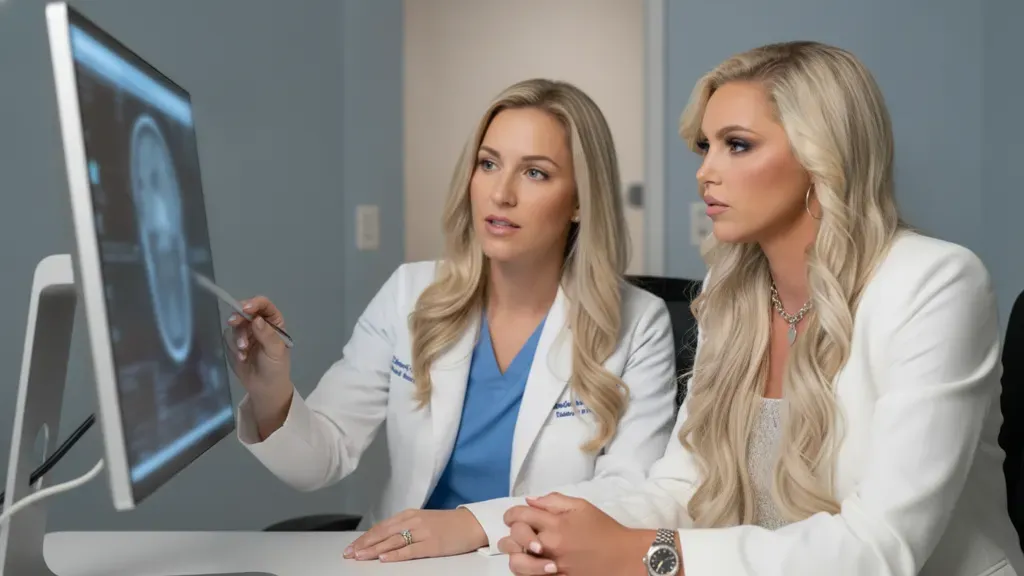
The CDC states that CT is not needed to identify every mild TBI or concussion, although it may be used when a patient is at risk for bleeding. The Radiological Society of North America and American College of Radiology head-injury guidance explains that head CT is used to detect bleeding, brain injury, and skull fractures, while brain MRI can provide more detailed views of soft tissue and selected brain abnormalities. These sources support a measured point: imaging choices belong to treating clinicians, not to an attorney ordering a test independently.
Emergency CT
What it may contribute: Rapid evaluation for bleeding, swelling, and skull fracture.
Important limit: A normal result may not exclude mild TBI.
Brain MRI
What it may contribute: More detailed images of brain tissue and selected abnormalities.
Important limit: It is not automatically required or conclusive in every case.
Clinical examination
What it may contribute: Observed symptoms, neurological findings, and recovery pattern.
Important limit: A brief exam may not capture every cognitive limitation.
Neuropsychological testing
What it may contribute: Detailed assessment of cognitive and emotional functioning.
Important limit: Interpretation requires qualified expertise and context.
Your attorney should collect the complete imaging record, including the images when available, the radiologist’s report, ordering notes, follow-up recommendations, and later studies. Do not ask a lawyer to replace a doctor. Ask the medical team what evaluation is appropriate, follow the treatment plan, and give counsel the records needed to understand how the clinical picture developed.
Expert Witnesses in Georgia TBI Cases: Who Testifies and Why?
Expert witnesses explain technical issues that a judge or jury cannot fairly evaluate from common experience alone. In a Georgia TBI case, different experts may address diagnosis, causation, prognosis, rehabilitation, life-care needs, lost earning capacity, or accident mechanics. The right experts depend on the injury and liability theory, not on a preset witness list.
Medical and cognitive experts
- Neurologists or neurosurgeons: diagnosis, neurological findings, treatment, and prognosis when within their specialties.
- Neuropsychologists: cognitive testing, interpretation, and the relationship between symptoms and functioning.
- Physiatrists and rehabilitation specialists: recovery, restrictions, therapy, and long-term functional needs.
- Life-care planners: future medical services, equipment, supervision, and support needs when supported by medical opinions.
- Vocational or economic experts: work capacity, career impact, and economic loss when the evidence supports those opinions.
Liability and human-factors experts
In a motor-vehicle or premises case, an accident-reconstruction or human-factors expert may help explain how the event occurred and why the forces or circumstances are consistent with the claimed injury. That opinion must be tied to reliable facts, such as photographs, measurements, vehicle data, or witness testimony. Experts do not fill factual gaps with speculation.
Bethany Schneider’s background is relevant to the trial presentation of complex evidence. She is a former King & Spalding defense trial attorney, a Certified Brain Injury Specialist, and a trial lawyer who has handled more than 40 trials. Her firm biography explains her experience. A credential does not replace medical providers, but it can help counsel understand and test the defense’s treatment of brain-injury evidence.
Q: Does a Georgia TBI lawsuit always need an expert witness?
A: Not every claim uses the same witnesses, but medical causation, prognosis, cognitive impairment, and future-care opinions often involve specialized knowledge. Whether expert testimony is required or strategically useful depends on the facts, the injuries, the defenses, and the court’s rules.
How Insurance Defense Teams Challenge Brain Injury Claims
Defense counsel often focuses on credibility, alternative explanations, and the connection between the event and the claimed impairment. Anticipating those challenges helps the plaintiff present a complete record instead of relying on a single diagnosis or a conclusory statement.
- “The scan is normal”: Respond with the full clinical record and qualified medical explanation of what the imaging can and cannot show.
- “There was no loss of consciousness”: Loss of consciousness is not the only possible sign of TBI. The medical history and examination still matter.
- “Treatment was delayed”: Explain the actual reason for the timing, while avoiding speculation about symptoms that were not documented.
- “The claimant looks fine”: Show cognitive, sensory, behavioral, or endurance limitations through records and witnesses who observe real life.
- “This is a preexisting condition”: Gather prior records and ask experts to distinguish baseline conditions from changes after the event.
- “The claimant did not follow treatment”: Document access problems, side effects, cost, transportation, advice received, and the treatment actually completed.
A strong response is not exaggeration. It is a transparent account of what the evidence proves, what it does not prove, and why the defense’s alternative explanation is or is not supported. Keep social-media posts, employment records, school records, and statements consistent with the medical history. Tell your lawyer about prior injuries rather than allowing the defense to present them first.
Talk with a Georgia TBI Trial Lawyer: 404-800-3060
Building a Case That Withstands Cross-Examination
A trial-ready TBI case is organized around a reliable timeline and supported opinions. The evidence should allow the decision-maker to follow the story from the event, through medical care, to the lasting effect on the person’s life without asking anyone to guess.
- Get appropriate medical care: Follow emergency and follow-up instructions, and report symptoms accurately.
- Preserve records: Save bills, reports, imaging information, therapy notes, prescriptions, work records, and communications.
- Track function: Record concrete changes in memory, concentration, sleep, mood, balance, work, driving, household tasks, and relationships.
- Identify witnesses: List people who saw the event, the immediate aftermath, or changes in daily functioning.
- Investigate causation: Compare the pre-injury baseline with the post-event history and obtain qualified opinions when needed.
- Prepare for limits: Address prior conditions, gaps, inconsistent statements, testing limits, and alternative causes honestly.
- Prove future impact: Use supported medical, rehabilitation, vocational, and economic evidence to explain ongoing needs.
Early evidence preservation matters because video may be overwritten, vehicles may be repaired, electronic data may be lost, and memories can fade. A lawyer can evaluate preservation steps and the legal strategy for your particular claim. Schneider Injury Law represents seriously injured people throughout Georgia and offers catastrophic injury representation for life-altering harm.
Claim Your Free Case Evaluation Through Schneider Injury Law
Frequently Asked Questions
Can you prove a TBI if an emergency CT scan was normal?
Yes, a normal emergency CT does not automatically rule out a mild traumatic brain injury. CT is often used to look quickly for bleeding, swelling, and fractures, while diagnosis may also depend on symptoms, examinations, follow-up care, neuropsychological testing, and qualified medical opinions. The CDC and ACR explain that imaging is only one part of evaluation.
What evidence shows how a TBI affects daily life?
Evidence can include treatment records, work restrictions, missed work, therapy notes, family and coworker observations, activity changes, prescription records, and a consistent symptom journal. The most useful evidence describes specific tasks and changes, such as needing reminders, losing the ability to work a normal shift, or requiring help with ordinary activities.
How long do I have to file a Georgia brain injury lawsuit?
Georgia personal-injury deadlines can be strict and exceptions may apply. Georgia Code section 9-3-33 generally addresses a two-year period for actions involving injuries to the person, but the correct deadline depends on the claim, defendant, facts, and any applicable exception. Speak with a Georgia attorney promptly rather than relying on a general deadline.
What should I bring to a Georgia TBI lawyer consultation?
Bring or identify the accident report, photographs, insurance information, medical records, bills, imaging reports, therapy records, work information, witness names, prior relevant medical history, and a short timeline of symptoms and treatment. Do not delay medical care while gathering documents. A lawyer can help identify what additional records may be important.
Will a TBI case go to trial?
Some cases resolve through negotiation or mediation, while others proceed toward trial. No lawyer can promise a particular outcome or timeline. The best preparation is evidence that is organized, medically supported, transparent about weaknesses, and ready to be tested in court if a fair resolution is not offered.
Who can help evaluate a traumatic brain injury claim in Georgia?
Schneider Injury Law is an Atlanta-based boutique personal injury trial firm representing seriously injured people throughout Georgia. Bethany Schneider combines defense-side trial experience with CBIS training and direct attorney involvement. Contact the firm to request a free consultation. All consultations are free. No retainers. No upfront fees. The fee is no fee UNTIL we win, meaning fees are contingent on recovery under the representation agreement.
Disclaimer: This article is for educational purposes only and is not legal advice. It does not create an attorney-client relationship, and no outcome is guaranteed. The medical and legal issues in a TBI claim are fact-specific. Seek appropriate medical care and consult a licensed Georgia attorney about your situation.