
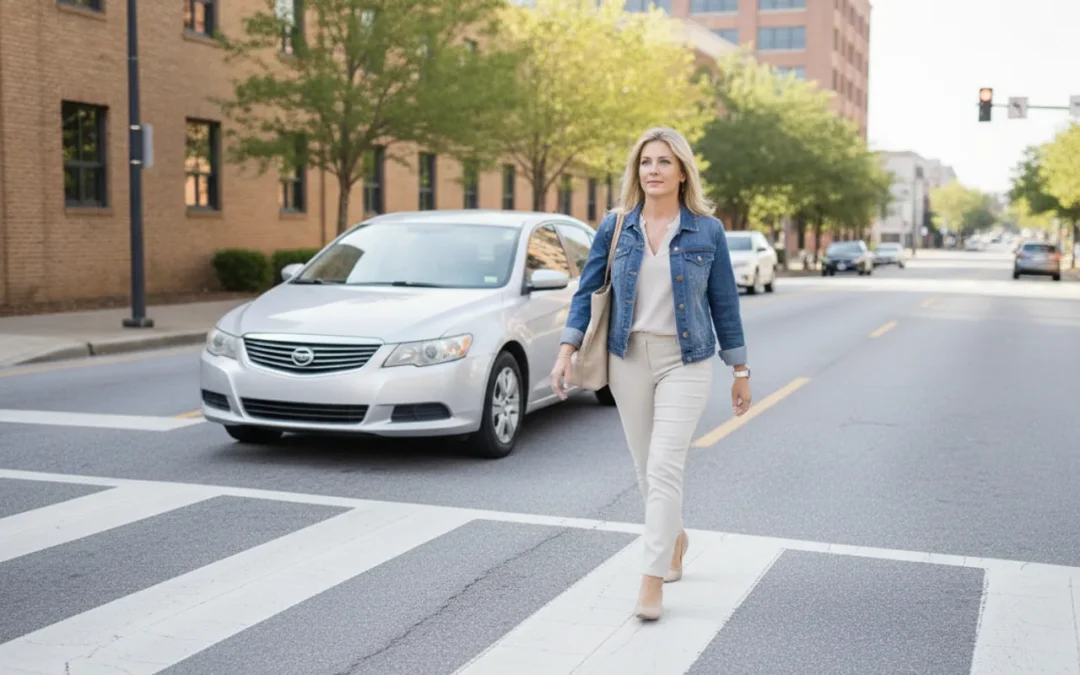
A serious pedestrian crash can leave someone facing painful injuries, missed work, and difficult questions about how the collision happened. A pedestrian accident lawyer can help explain what evidence may matter and how Georgia rules could apply. The facts differ in every case, and an injury alone does not establish who was legally at fault.
Call to request a free consultation
What should you do after a pedestrian crash?
Put immediate safety and medical care first. Call 911 if anyone may be injured or there is a continuing danger. If you can do so safely, move out of traffic and follow directions from emergency responders. A person may feel shaken or believe an injury is minor, but symptoms can develop or become clearer later. Seek medical evaluation and follow the treating provider’s instructions.
When it is safe, gather information without delaying care or putting yourself in danger. Get the driver’s name, contact details, vehicle and insurance information. Ask witnesses for a way to reach them. Take photographs of the scene, vehicle positions, visible injuries, traffic signals, crosswalk markings, lighting, and anything that may have blocked a driver’s view. Record the date, time, location, and your own recollection while it is fresh.
Report the crash to law enforcement and request information about how to obtain the report. Georgia’s Department of Transportation provides a crash data and reporting resource that explains how crash information may be located and filtered. A report can be useful, but it is not necessarily a complete account of every disputed fact.
Keep discharge papers, prescriptions, bills, work records, and messages related to the collision. Do not guess about fault or the full extent of an injury when speaking with an insurer. You can give basic factual information and ask what documentation is needed. If you are unsure how to respond to a request, consider getting legal guidance before giving a recorded statement or signing a release.
How do Georgia crosswalk laws affect fault?
Georgia law requires drivers to stop and remain stopped for a pedestrian in a crosswalk when the pedestrian is on their side of the road or approaching within one lane of that side. Some intersection crosswalks count even without painted lines. Pedestrians must also follow crossing rules and must not suddenly step into the path of a vehicle that cannot stop in time.
Crosswalk status matters, but it does not answer every question. Investigators may examine whether the crossing was marked or unmarked, whether traffic signals were present and functioning, where the pedestrian entered the roadway, the vehicle’s direction and speed, and whether the driver had time to see and avoid the person. Conditions such as darkness, weather, visibility, and parked vehicles can also affect what each person could reasonably perceive.
Do not assume that a person crossing outside a marked crosswalk automatically has no claim, or that a driver is automatically responsible whenever a collision occurs in a crosswalk. The precise location and circumstances matter. Questions about right of way and fault should be reviewed against the applicable law and the available evidence.
What driver actions may be relevant to a pedestrian crash?
A collision may raise questions about whether a driver used reasonable care in the circumstances. Investigators may examine whether the driver failed to yield when required, turned across a pedestrian’s path, drove too fast for visibility or conditions, or failed to keep a proper lookout. A driveway or parking-lot collision may call for a different review than a crash at a signalized intersection.
Those are questions to investigate, not conclusions about any particular driver. A pedestrian may be difficult to see because of lighting, weather, road layout, or an obstruction. A driver’s account, witness observations, video, vehicle evidence, and physical scene details can help test competing explanations. Do not treat a citation, a report’s initial narrative, or the presence of a crosswalk as conclusive on its own.
What evidence can help explain how the collision happened?
Early evidence can help preserve details that may otherwise be lost. The most useful material depends on the particular crash. It may include:
- Scene photographs and measurements: Crosswalk markings, traffic controls, sight lines, road layout, lighting, and debris can help establish where events occurred.
- Witness accounts: Names and contact information allow investigators to follow up with people who saw the approach, impact, or events just before the crash.
- Video: Nearby homes, businesses, buses, or traffic systems may have cameras. Some recordings are overwritten, so a prompt preservation request may be important.
- Vehicle evidence: Damage, event data, and inspection findings may help clarify the point of impact or movement. Access and preservation need to be handled appropriately.
- Medical records: Evaluation and treatment records document symptoms, diagnosis, and care. They can also help distinguish pre-existing conditions from injuries following the event.
- Crash and investigative records: The police report, photographs, diagrams, and related records can provide a starting point, though they may not resolve disputed issues.
Write down your memory of what happened in your own words, including what you saw, heard, and did. Keep the original photos and documents when possible. Avoid editing or posting detailed crash accounts on social media. If you have a family member helping, ask them to save messages and information rather than trying to reconstruct the event later.
National research can provide context for why pedestrian crash investigations look closely at road design and visibility. The federal National Pedestrian Crash Report examines pedestrian fatalities and police-reported crashes. A CDC report focused on four central Atlanta-area counties also examined pedestrian fatalities; it is a historical study, not a current count, but it illustrates the importance of looking carefully at local conditions (CDC report on pedestrian fatalities in Cobb, DeKalb, Fulton, and Gwinnett).
How do insurers evaluate a pedestrian injury claim?
An insurer may review the crash report, statements, photographs, medical records, and other evidence. It may ask how the collision occurred, whether the pedestrian or driver had an opportunity to avoid it, and whether the claimed injuries are connected to the crash. An insurance company’s initial account is not the final word on fault or the value of a claim.
Georgia uses a modified comparative-fault system. In broad terms, a person’s share of responsibility can affect whether and how much they may recover; a person found 50 percent or more responsible generally cannot recover damages under the rule. Applying that standard requires a careful review of the facts and applicable law. Do not rely on a quick estimate based on one photograph or a short description of the collision. If you are less than 50% at fault, your compensation may be reduced by your share of responsibility.
If the driver has no insurance, too little insurance, or leaves the scene, your own auto policy may help through uninsured or underinsured motorist coverage. You may also qualify under a policy held by a relative who lives with you. Coverage depends on the policy and the circumstances of the crash.
Before accepting a settlement, understand what it resolves. A release may end the claim for the injuries and losses covered by its terms, even if additional treatment or expenses arise later. Keep copies of all written offers and communications. You may find it useful to review the firm’s general information about serious motor vehicle injury claims in Atlanta and its explanation of how injury-related losses may be evaluated.
How can you keep useful records while you recover?
Recovery can involve appointments, transportation, help at home, and repeated conversations with insurers or providers. A simple dated log can reduce the burden of trying to remember every detail later. Note treatment dates, symptoms you want to discuss with a provider, missed work, and practical changes in daily activities. Keep the log factual and private; it is not a substitute for medical care or a provider’s records.
Save bills, receipts, mileage records, and employer communications that relate to the crash. If a family member helps with everyday tasks, note what help was provided and when. Ask medical providers questions about care directly, and do not stop or change treatment based on an insurer’s view of the claim. Clear, organized records can help you and any attorney reviewing the matter understand what has happened without overstating what the documents show.
What injuries and losses may follow a pedestrian collision?
A person on foot has little protection from a moving vehicle. Injuries can range from fractures and deep bruising to head, spinal, or internal injuries. Some injuries require surgery, rehabilitation, or extended help with everyday activities. A family may also have to coordinate care while managing work and household responsibilities.
There is no single measure that fits every person. Depending on the facts and applicable law, records may address medical expenses, future care needs, time away from work, changes in ability to earn, pain, and the effect of an injury on daily life. Families dealing with a permanent or severe injury can learn about the firm’s work with catastrophic injury cases. Whether a particular loss is recoverable depends on evidence and legal review; no result should be assumed in advance.
| Evidence or record | What it may help clarify | Practical next step |
|---|---|---|
| Scene and vehicle photographs | Crossing location, visibility, damage, and road conditions | Save original files and note when and where each was taken. |
| Witness details and available video | What happened before impact and what each person could see | Record contact information and identify possible camera locations promptly. |
| Medical and work records | Injuries, treatment, limitations, and time missed from work | Keep copies and maintain a simple timeline of care and missed work. |
| Police and insurance records | Initial observations, reported facts, and the insurer’s position | Request available records and keep written communications together. |
When should you speak with a pedestrian accident lawyer?
Consider seeking legal advice when injuries are serious, fault is disputed, the driver or insurer is asking for a recorded statement, important video may be at risk of being erased, or a settlement offer arrives before the full impact of the injury is clear. A lawyer can review what is known, identify questions that remain, and explain possible next steps. Speaking with a lawyer does not mean you must pursue a claim.
Time limits can apply to injury claims, and special rules may affect claims involving government entities or other circumstances. The applicable deadline can depend on the facts, so do not assume that you have unlimited time. A prompt review can help identify what deadlines and preservation issues may matter in your situation.
Schneider Injury Law is an Atlanta-based trial firm representing seriously injured people in Georgia. Bethany Schneider is the firm’s founder and trial attorney. Before representing injured people, she practiced on the defense side at King & Spalding. The firm describes its approach as preparing serious injury cases for trial, while giving clients direct access to Bethany. The firm also handles catastrophic injury matters; whether it can assist with a particular case depends on its review and availability.
Consultations are free. If the firm accepts a case, its contingency-fee arrangement means attorney fees are owed from a recovery, not upfront; the details should be explained before any representation begins. There is no promise that a claim will be accepted or that it will produce a particular result.
Request a free, no-obligation consultation
Frequently Asked Questions About Georgia Pedestrian Accidents
Does a pedestrian have to be in a marked crosswalk to have a claim in Georgia?
Not necessarily. Crosswalk location and right-of-way rules can affect the analysis, but a collision outside a marked crosswalk does not by itself answer whether someone may have a claim. The roadway, signals, pedestrian conduct, driver conduct, and other evidence all matter.
What if I was partly responsible for the crash?
Shared responsibility does not always end a claim. Georgia’s comparative-fault rule can reduce recovery based on a person’s share of fault, and the general bar applies at 50 percent or more responsibility. The evidence and the legal standard must be applied to the specific facts.
Should I speak with the driver’s insurance company?
You may need to provide basic information, but you do not have to guess about fault, make assumptions about your recovery, or sign a release without understanding it. Keep a record of communications and consider getting advice if you are asked for a recorded statement or a broad authorization.
How long do I have to bring a Georgia pedestrian injury claim?
You generally have two years to file a personal injury lawsuit in Georgia, although exceptions can change the deadline. If your claim involves a government entity, you may need to send a formal notice much sooner. Ask an attorney to check your deadlines promptly.
About the Attorney Reviewer
Reviewed October 5, 2026, by Bethany Schneider, founder and trial attorney at Schneider Injury Law. Bethany previously practiced as a defense attorney at King & Spalding and has tried more than 40 cases. This article offers general information, not legal advice; an attorney should review the facts and current law applicable to an individual matter.
After a pedestrian crash, taking care of your health and preserving reliable information can help you make informed decisions about what to do next.