
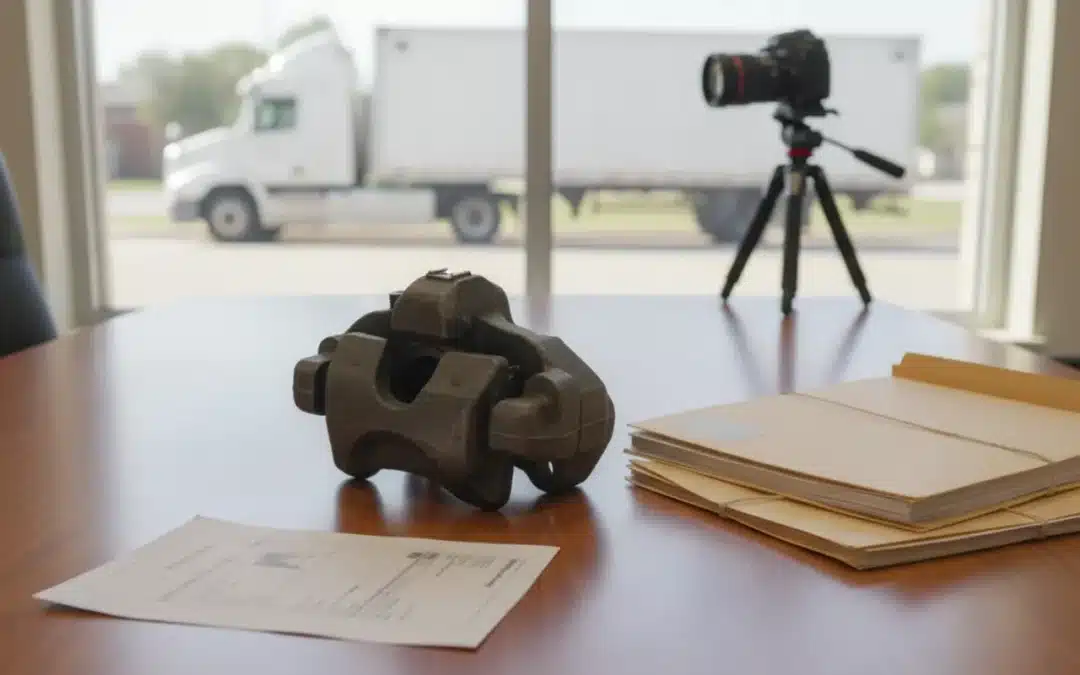
A recall notice can point a family toward one part. It does not show whether that part was on this truck, or whether it played a role in the crash. A trucking accident attorney looks past the headline to the component itself. That part might be a brake chamber, a front wheel, a steering joint, or a trailer axle nut. The records that show how it was installed and maintained matter too.
Most families will not have the truck or its parts. Counsel can ask the company that has them to hold those items. Safety comes first. Do not repair, test, or throw a part away while those questions are still open.
Call to request a free consultation
What can a recall notice show, and what can it not?
A notice usually names a maker, a model range, a build window, and a described hazard. It may also name a remedy, such as an inspection or a replacement part. That is a lead. It is not proof that the truck in this crash was covered, that the part failed, or that the failure caused the injury.
Save the notice as you found it. Keep the full page, letter, or email, the date, and the company or agency that issued it. If a later notice changes the model years or the remedy, keep both copies. Do not replace the earlier one. A news summary is not a substitute for the official report.
Three questions stay separate. Was this truck or part inside the stated range? Did that part fail in the way the notice describes? Did that failure contribute to this crash, rather than speed, weather, cargo, or another part? The notice can start the first question. The part and its history have to carry the other two.
Public files show why the range matters. In NHTSA campaign 21V-226, Navistar’s report covered certain 2021 International LT and RH trucks. The report described a problem inside a parking-brake chamber. A different campaign can cover a different year, a different model, or a different part of the same brake system. Matching the words on the notice to the part on this truck is the work.
Which parts might a trucking accident attorney compare to the notice?
Advice about “the product” is too broad for a tractor-trailer. Brake, wheel, steering, and trailer campaigns describe different parts and different records. The examples below come from public NHTSA reports. Each one shows what to look for. None of them says a particular company, driver, or part caused a particular Georgia crash.
| Component | NHTSA example | What the filing describes | What still has to be matched |
|---|---|---|---|
| Brakes | 21V-226 | Parking-brake air leak | Is this the chamber? |
| Wheels | 24V-250 | Front-wheel flange crack | Which axle and wheel? |
| Steering | 21V-689 | Steering joint may separate | Was this joint inspected? |
| Trailer parts | 23V-839 | Axle nut may be loose | Which trailer and axle? |
Use the table as a map, not a list of fault. A family can preserve the notice and any identifying details they already have. A lawyer can then ask the company that controls the truck to hold the matching part and records.
Who actually has the truck and the recalled part?
Most injured families never take the tractor or the trailer home. A motor carrier, a leasing company, a repair shop, a tow yard, or an insurer may control the vehicle. The part maker may control a returned component. Those are different companies. A family usually cannot walk onto a lot and photograph a brake chamber or an axle.
That limit is practical, not a reason to wait in silence. Counsel can send a written request to each company that may have the truck, the trailer, or the named part. The request can ask that company not to repair, sell, scrap, or return the component until it has been identified and photographed. It can also ask for the location, the vehicle identification number, and any work order that names the part.
Write down what you already know before that letter goes out. Note the carrier name on the door, the trailer number if you saw it, the tow company, and where you were told the truck went. Mark anything you did not see yourself as something someone else reported. A lawyer can use that short list to decide whom to contact. The list does not prove which company is responsible.
Access also changes what “preserve the part” means. If the truck is in someone else’s yard, do not go there to remove a wheel, a chamber, or a steering part. Ask counsel to seek access and a hold. If a shop already replaced a part, ask where the old one went and whether a recall return was started. Keep the replacement and the original separate.
How do brake recalls differ from a routine brake repair?
A brake campaign describes one condition, not every brake repair. In NHTSA campaign 21V-226, Navistar reported a problem on certain 2021 International LT and RH trucks. The official report says a spring inside the parking-brake chamber may have been made out of shape. That spring may shift a plate and, over time, wear a hole in the flexible seal inside the chamber.
The report calls that seal a diaphragm. A hole there can let air leak. The parking brake may then come on by itself, which can raise the crash risk. The stated remedy was to inspect the chambers and replace the ones with a shifted plate. NHTSA’s April 9, 2021 letter describes the same air-leak condition.
In plain terms, this notice is about one parking-brake part, not about worn linings or a routine brake job. The useful record names the chamber and says whether it was inspected, replaced, or left on the truck. Keep the full notice, the inspection or repair record, and any photo that shows the chamber and its markings. Do not take the part off to get a clearer photo.
A shop invoice that only says “brakes repaired” is not enough to match this notice. Ask whether the record names the parking-brake chamber from this campaign. If your family does not have the truck, counsel can ask the company that does to hold the chamber and that record. A recall also does not mean every brake mark on the truck is the recalled condition. Note what you can see, who pointed it out, and whether anyone moved the truck before you saw it. Leave the conclusion open.
What should you preserve when the notice is about wheels?
A wheel notice is often about one wheel on one axle, not about “bad tires” in general. In NHTSA campaign 24V-250, Daimler Trucks North America reported a front-wheel issue. The official report covers certain 2023 and 2024 Freightliner Cascadia, Business Class M2, 122SD, 114SD, and 108SD trucks, plus a 2024 Western Star 57X.
The report says the inner edge of the front wheels, called the bead-seat flange, may crack. If a crack grows, pieces of that edge may break away and damage the tire. Damaged front tires can cause a loss of control. NHTSA’s April 9, 2024 letter said the repair plan was still being developed.
That notice is useful because it names the front axle and the wheel, not a generic tire. A front wheel is not a rear wheel and not a trailer wheel. If the crash involved a blowout or a wheel that came apart, preserve photos that show which axle, which side, and which wheel. Keep any readable markings on the tire and any piece of the wheel that came off. A tire put on after the crash is a different item. Keep it separate from the tire that was on the truck at impact.
A later repair can change the evidence. The report limited the group to listed wheels from a stated production window. A wheel replaced outside that window, or a wheel on a different axle, may not be the wheel named in the notice. Keep the invoice that shows which wheel was removed and where it went. Do not treat a new front tire as proof that the original wheel was inspected. Do not guess a wheel size from memory. If a maintenance printout lists only “front tire,” keep it and mark it as incomplete.
How can a steering recall be tied to the linkage on this truck?
To match a steering recall, identify the specific part named in the notice. In NHTSA campaign 21V-689, Daimler Trucks North America reported a drag-link issue. The report covers certain 2019 through 2021 Freightliner Cascadia trucks and certain 2019 and 2020 Classic Cascadia trucks. A drag link is the bar that connects the steering gear to the wheel.
The official report says the tapered joint where that bar meets the steering arm may not have been tightened enough. The joint may come loose and separate. Separation can cause a complete loss of steering control. NHTSA’s September 14, 2021 letter says dealers were to inspect the joint and repair it as necessary.
That notice names one joint, not every steering complaint. Preserve photos of the steering linkage and of any part that was bent, separated, or replaced, if you can do that safely. If a dealer letter says this joint was inspected, keep that letter with the notice. Do not file it with general repair mail. If the carrier or the dealer has the truck, counsel can ask that company to hold the linkage and the inspection record.
A driver may report a pull, a shake, or a wheel that felt loose before the crash. Write that down as a reported feeling, with who said it and when. Do not turn it into a conclusion that the joint separated. The named part, its markings, and whether it was still on the truck after impact are the facts that let someone test that report later. Most families will not have the truck. Counsel can request that the company holding it preserve the part.
What changes when the recalled part is on the trailer?
A trailer campaign adds an identity problem. The part may belong to a different company than the tractor. In NHTSA campaign 23V-839, Great Dane reported a recall of certain 2024 Champion dry van trailers. The official report says the rear axle spindle nut may not have been tightened properly.
A spindle nut holds the wheel end on the axle. A loose nut can allow the wheel end to move or the wheel to separate. NHTSA’s December 15, 2023 letter lists 346 trailers and a remedy of inspecting and tightening the nut. A trailer axle nut is not a front-wheel flange on the tractor, even if both can affect control.
The report also shows why the build window matters. Great Dane limited the group to trailers built with a particular nut between September 22 and December 4, 2023. Trailers built before that window used a different nut. A trailer number alone does not place a unit inside that window. Start by separating the tractor from the trailer. Photograph both unit numbers if you can see them safely, the trailer identification plate, and the axle the notice names.
If you cannot get to the trailer, write down who has it. A bill of lading may show who owned or leased the trailer. It does not show whether the axle nut was the recalled one. If the trailer went to a different yard from the tractor, note where each unit went. Do not assume the motor carrier, the trailer owner, and the part maker are the same company. Keep the trailer number, the yard, and the notice together. Counsel can then ask the company that has the trailer to preserve the axle and the inspection record.
How do you match a notice to the part and its records?
Put the notice’s identifiers on one side and the part’s identifiers on the other. Copy the maker, model years, part name, and any vehicle number, serial number, or production window exactly. Then list only what you can see on the truck, the trailer, or a record. Mark unreadable digits as unreadable. If the part is in someone else’s possession, write that down instead of guessing the stamp.
- Copy the campaign number and the part name from the NHTSA report, not from a headline.
- Record the tractor and trailer identification numbers, and any part stamp you can see safely.
- Note which axle and which side the part came from.
- Keep the full notice, any later version, and the date and campaign number.
- Keep a conflicting invoice next to the notice instead of picking a winner.
- Ask a lawyer to seek a hold before anyone removes the part for a closer look.
A service sheet that says “brake chamber” when the notice says “spring brake chamber diaphragm” provides less detail than the recall notice. The same is true if the notice names a front-wheel edge and the only photo is a trailer tire. Keep both. The gap is information, not a reason to fill in a missing number. If the part is gone, keep the notice anyway, along with purchase, installation, and repair records that might identify it.
The records that help are short, but they still have to name the part, the unit, and who has it now. Ask counsel to seek a hold on a chamber, wheel, steering joint, or trailer axle. Do not clean or test it. Keep photos of the identification plates, the axle position, and readable stamps when you can take them safely. Keep the invoice or dealer letter that names this part, including a letter that says the repair was not finished.
Communications about that part belong in the same file. Keep a carrier email, a dealer letter, or a note of a call about sending the part back. Write the date and who spoke. Label anything someone reported as a report, and label anything a photo shows as a photo.
If a part is dangerous to leave in place, follow the safety instruction and write down what was done. Preservation never outranks safety. A replaced part should not be thrown away just because a new one arrived. If a recall repair requires the part to go back to a dealer, ask a lawyer about the timing before it leaves.
If a recall notice or repair record leaves questions about the truck or its parts, Schneider Injury Law’s free consultation can help you discuss what to preserve before the evidence changes.
How does Georgia law fit a component recall?
A Georgia product claim still turns on the specific part, the specific truck, and the injury. The notice does not decide that by itself. Under Georgia law, product and negligence questions depend on facts a lawyer has to examine. Those facts include which company designed, sold, installed, or maintained the part. The deadline for a claim depends on the claim, so a lawyer has to calculate the date.
That division of responsibility is easy to blur on a truck. The motor carrier may maintain the tractor. A leasing company or another carrier may own the trailer. A supplier may have built the chamber, wheel, steering part, or axle. A dealer may have performed the recall repair incorrectly. None of those roles should be assumed from the logo on the door. The notice names a group of vehicles and a condition. It does not name the company that controlled this truck after the crash.
Schneider Injury Law’s truck accident investigation page explains how a crash inquiry can involve more than one party. Its dangerous products page covers the product side. The truck accident law firm guide explains what to ask before hiring counsel. Bring the notice, any part photos you already have, and the short list of mismatches. Counsel can use that packet to ask the companies that have the truck for the rest.
If the notice or a later repair has left questions about the truck or part, start with Schneider Injury Law’s free consultation to discuss the evidence that may still be available.
Frequently asked questions
Does a brake recall mean the brakes caused the crash?
No. A notice such as 21V-226 describes a parking-brake chamber condition on listed International trucks. It does not prove this chamber was installed, leaked, or contributed to this crash. The part and its repair history still have to be compared with the notice.
Should I keep a wheel that was replaced after the wreck?
Keep the wheel and tire that were on the truck at impact, if you have them, and keep any replacement separate. A campaign such as 24V-250 names front-wheel flanges, so the axle and wheel position matter. If a shop has the original wheel, ask a lawyer to request that the shop hold it.
What if the recalled part is on the trailer, not the tractor?
Photograph the trailer identification plate and the named part if you can, and keep them separate from the tractor file. Campaign 23V-839 concerned axle nuts on listed Great Dane Champion trailers. The trailer owner, the motor carrier, and the part maker may not be the same company. Counsel can ask whoever has the trailer to preserve it.
Can I send the part back for the recall repair?
Address an immediate safety risk first. Before a chamber, steering joint, wheel, or trailer axle is repaired or returned, preserve identifying photos and ask a lawyer about the timing. A repair can be the right safety step and still change the evidence if nobody records the part first. Most families will need counsel to make that request to the company that has the truck.
This article is general information, not legal advice. Reading it does not create an attorney-client relationship.