
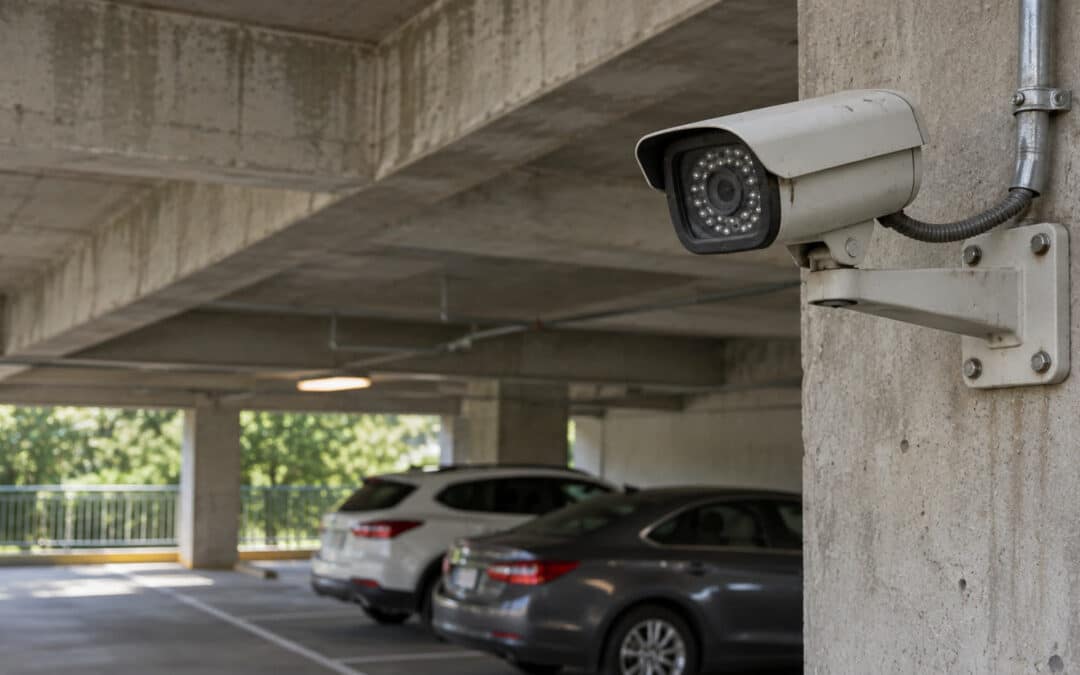
Missing security camera footage does not automatically end your civil case.
If you or someone you love was sexually assaulted on another person’s property, an attorney can investigate whether other copies of the footage exist, what other evidence is available, and whether the property owner had a legal obligation to preserve the video before it disappeared.
Claim Your Free Consultation Today!
Reviewed by Bethany Schneider, Founder, Schneider Injury Law | Updated November 4, 2026
Why Security Footage Still Matters — Even When the Assault Happened in a Private Space
A sexual assault may occur in a private space without cameras, such as a hotel room or apartment. Footage from surrounding areas may still provide important evidence.
Recordings from entrances, hallways, elevators, parking areas, and exits may help establish:
- How and when the attacker accessed the property — through a propped door, an unsecured entrance, or an area that should have been monitored
- The timing of events — when the survivor arrived, when the attacker entered, and how long staff took to respond
- Whether security personnel were present and where they were positioned at the time
- The condition of access points — whether gates, locks, or controlled-entry systems were functioning
- Staff awareness and response — whether employees were alerted and how quickly they acted
This kind of footage can be central to a negligent security claim even when no camera ever captured the assault directly.
Why Contacting an Attorney Quickly Can Help Preserve Security Footage
Security footage may be lost long before a lawsuit is filed. Some surveillance systems automatically delete or overwrite recordings in as little as seven days, depending on their settings and storage capacity. Contacting an attorney as soon as you can safely do so gives the attorney an opportunity to send preservation letters while relevant footage may still exist.
An attorney can send written notices to the property owner, management company, security provider, and other parties that may control recordings. These letters identify the relevant locations and time periods and request that footage be preserved rather than deleted or overwritten. A preservation letter cannot guarantee that video will be saved, but acting promptly can reduce the risk of losing important evidence.
If time has already passed, do not assume it is too late to seek help. An attorney can investigate whether saved clips, backups, or other evidence remain available.
What Is Spoliation of Evidence in Georgia?
Spoliation is the legal term for destroying, hiding, altering, or failing to preserve evidence that is relevant to a legal claim or anticipated lawsuit.
If a property owner loses or deletes relevant security footage, a Georgia court will not automatically impose consequences. A judge will examine the specific circumstances, including:
- Whether a duty to preserve the footage had arisen at the time it was lost
- Whether the loss was accidental, the result of routine overwriting, or something more deliberate
- Whether the missing footage actually prejudices the survivor’s ability to prove their claim
These questions are part of a broader factual inquiry — not a rigid checklist — and the answers shape what legal remedies, if any, may be available.
When Does a Property Owner Have a Duty to Preserve Security Footage?
The leading Georgia authority on this question is Phillips v. Harmon, 297 Ga. 386 (2015), in which the Georgia Supreme Court held that the duty to preserve relevant evidence arises when litigation is actually anticipated or reasonably foreseeable to the party in control of the evidence — viewed from that party’s perspective.
Importantly, a formal preservation letter from an attorney can provide notice, but the duty may arise before any letter is sent. Under Phillips, courts consider the totality of the circumstances, including:
- The type and severity of the incident — a serious assault on the property may make civil litigation foreseeable to a reasonable property owner even without formal notice
- The clarity of fault — whether the property’s role in the incident would be apparent to a reasonable person
- The potential financial exposure the property owner faces
- The history of prior incidents on the property or prior litigation involving the owner
- Any internal investigation the property owner initiated after the incident
A preservation letter is an important tool — and sending one quickly is one of the first things an attorney should do — but it is not the only way a duty to preserve can arise.
What Happens if Footage Is Deleted After a Duty to Preserve It Arose?
If a court determines that a property owner was obligated to preserve footage and failed to do so, several outcomes are possible. None are automatic, and the appropriate remedy depends on the specific facts.
Adverse Inference Instruction
A court may instruct the jury that they are permitted to draw an adverse inference against the party responsible for the loss. Whether this instruction is given depends on factors including the degree of fault for the loss, whether the missing evidence was important to the case, whether the prejudice can be cured through other evidence, and whether the conduct was in good or bad faith. Proving that footage was deleted does not, by itself, establish liability for the assault.
Court Sanctions
In cases of intentional or egregious destruction, a court may impose more serious consequences — such as striking the defendant’s defenses or entering a judgment in the plaintiff’s favor. These outcomes are reserved for the most serious misconduct and are not the typical result of routine overwriting.
Effect on Settlement Discussions
Evidence of improper deletion may affect how the property owner and their insurer approach settlement discussions.
How an Attorney Investigates Missing Footage
When security footage is gone, an attorney does not simply accept that the evidence no longer exists. A thorough investigation examines:
- Whether the footage was ever recorded — Were the cameras functioning? Was the relevant area covered? Were there gaps in the system?
- Whether it was overwritten on a routine schedule — and whether that schedule was followed consistently or selectively
- Whether it was selectively exported or retained — Did someone pull specific clips while allowing others to overwrite? Are there export logs showing what was saved and when?
- Whether copies exist elsewhere — Law enforcement may have requested and retained footage during a criminal investigation. Third-party vendors or cloud storage services may hold backups. Neighboring businesses may have captured relevant activity on their own systems.
- What the system logs show — Audit trails, IT records, and access logs can reveal when footage was viewed, exported, or deleted — and by whom.
This investigation is often where cases are built or strengthened, even when the original footage is gone.
What Evidence Can Still Help if the Footage Is Gone?
Even without security video, an attorney can investigate whether other evidence supports your case, including:
- Eyewitness accounts from other guests, tenants, employees, or bystanders
- Incident reports filed by property staff at the time of the assault
- Prior crime records documenting previous assaults or security incidents on the property
- Maintenance and inspection records showing the condition of lighting, locks, gates, and security equipment
- Medical records and documentation of your physical and psychological injuries
What to Do After a Sexual Assault on Someone Else’s Property
Step 1: Seek Medical Care
Getting medical attention is the most important first step — both for your health and to create a medical record documenting your injuries. Seek care as soon as you are able to do so safely.
Step 2: Consider Reporting and Evidence-Preservation Options
You are not required to file a police report to pursue a civil claim, and you do not have to decide right away. That said, a police report creates an official record and may prompt law enforcement to independently request and preserve surveillance footage before it is overwritten. An attorney can help you understand your options without pressuring you toward any particular course of action.
Step 3: Contact a Personal Injury Attorney as Soon as Possible
An attorney can immediately send a litigation hold letter asking the property owner to preserve all relevant evidence — including surveillance footage, system logs, incident reports, and maintenance records. The sooner this step is taken, the better the chance that evidence still exists.
Step 4: Document What You Can, When You Are Ready
When you feel safe doing so, photograph the location and any visible cameras if you can do so safely, write down what you remember about the incident and the property’s conditions without guessing or filling gaps, and save the names and contact information of any potential witnesses.
Step 5: Be Thoughtful About Communications with the Property Owner
Avoid giving recorded statements or signing anything presented by property management or their representatives without first speaking to your attorney.
Negligent Security and Your Right to Compensation
In many sexual assault cases, the attacker is never identified, has no assets, or cannot be located. That is why negligent security claims against the property owner are often the most meaningful path to civil recovery.
Georgia enacted a significant new negligent security framework in 2025 through Senate Bill 68, codified at O.C.G.A. §§ 51-3-50 through 51-3-57. Under this law, a property owner’s liability is not established simply by pointing to inadequate lighting or a broken gate. The statute sets out several requirements, including specific grounds for foreseeability, a known physical condition that created an elevated risk and was exploited by the attacker, and a failure to exercise ordinary care that contributed to the injury.
The law that applies to your case depends on when the incident occurred. The negligent security provisions apply to causes of action arising on or after April 21, 2025. Claims arising from incidents before that date are governed by prior law. Our negligent security guide explains this framework in more detail.
Compensation in these cases may include medical and mental health treatment costs, lost income, pain and suffering, and in the most tragic circumstances, wrongful death damages.
Frequently Asked Questions
Can I pursue a civil claim even if criminal charges were never filed?
Yes. A civil personal injury claim is entirely separate from any criminal case. You do not need a criminal conviction — or even a criminal investigation — to pursue compensation from a property owner whose negligence contributed to the assault.
Can I still recover compensation if the security footage was deleted?
It may still be possible. The outcome depends on what other evidence is available, when the footage was lost, and the specific circumstances of your case. An attorney can evaluate what evidence exists and advise you on your options.
What if I waited before reporting or seeking legal help?
Survivors often face significant barriers to coming forward immediately, and that is understandable. However, Georgia’s statute of limitations sets deadlines for filing civil claims. It is important to speak with an attorney as soon as you are ready to understand how timing may affect your options.
Does a property owner have to keep security footage indefinitely?
No. There is no blanket Georgia law requiring businesses to retain footage for a specific period. However, under Phillips v. Harmon (2015), once a civil claim becomes reasonably foreseeable to the property owner, they are obligated to preserve relevant evidence — even before receiving a formal preservation letter.
What is a litigation hold letter?
It is a formal written notice from your attorney asking the property owner to preserve specific evidence related to your potential claim — including surveillance footage, system logs, maintenance records, and incident reports.
What if I am a family member of a survivor?
Family members may have a role in the legal process depending on the circumstances. In cases involving a minor, a parent or guardian would typically be involved. In the most tragic cases involving a fatality, Georgia law provides specific rights to surviving family members under wrongful death statutes. An attorney can explain how the law applies to your specific situation.
Contact Schneider Injury Law
If you or someone you love was sexually assaulted on another person’s property in Georgia, missing security footage does not close the door on your recovery. But the window for preserving other critical evidence can close quickly.
Contact Schneider Injury Law for a free, confidential consultation. We can investigate what happened, identify all available evidence, and advise you on your legal options with compassion and discretion.
Claim Your Free Consultation Today!
Disclaimer: This article is for general informational purposes only and does not constitute legal advice. Reading this article does not create an attorney-client relationship. Please consult a licensed Georgia personal injury attorney about the specific facts and deadlines of your case.