
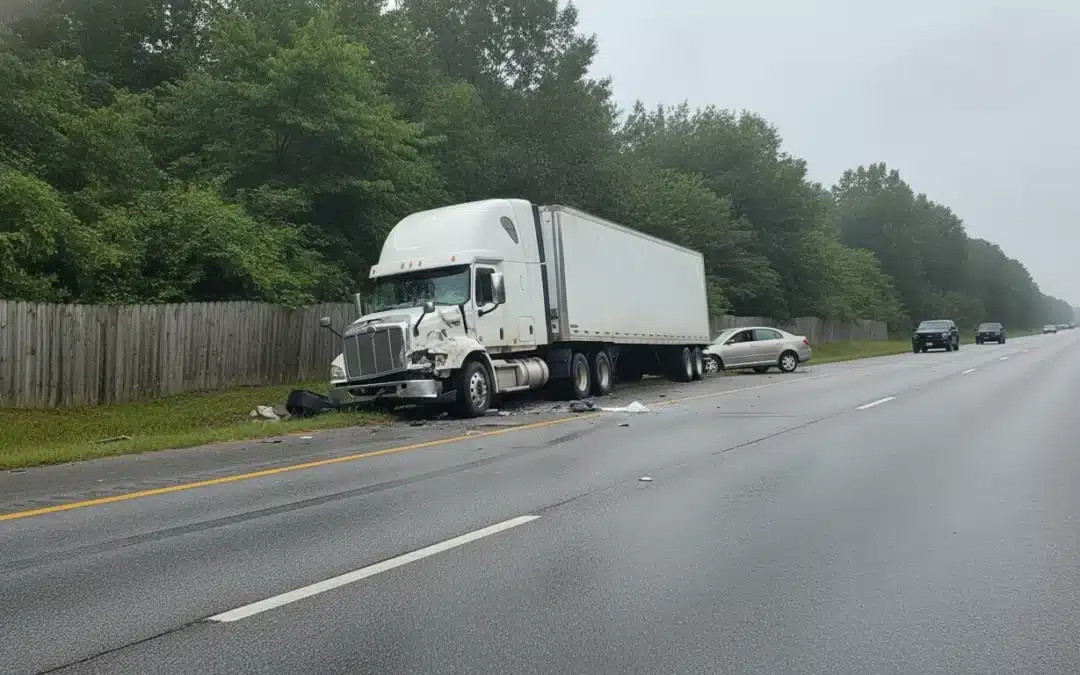
After a Georgia truck wreck, important evidence may be held by a carrier, driver, insurer, repair facility, or another company involved in the shipment. Some records also have limited retention periods. That is why evidence preservation should be considered promptly, often before a lawsuit is filed, when litigation is reasonably anticipated.
Call Schneider Injury Law at 404-800-3060 to claim your free truck wreck consultation
A truck wreck lawyer should begin evaluating preservation as soon as the facts suggest a serious claim may lead to litigation. The lawyer may send targeted preservation requests and seek records such as electronic logging data, accident reports, inspection materials, vehicle information, and communications. Georgia law recognizes preservation duties when a party actually anticipates, or reasonably should anticipate, litigation, not only after receiving formal notice (Georgia Supreme Court).
Reviewed by Bethany Schneider, Founder and Trial Lawyer
Last reviewed: September 30, 2026. Bethany Schneider is licensed in Georgia and Florida. She has handled catastrophic injury and wrongful death matters. She is a Certified Brain Injury Specialist and has tried more than 40 cases.
Preserving a record does not establish who caused the crash or guarantee a result. It helps protect the information needed to investigate what happened, test competing explanations, and understand which people or entities may bear responsibility. The timing matters because carrier-controlled records can change or disappear as ordinary retention periods expire.
Early preservation can help keep relevant records available for a fact-based investigation.
Why Evidence Preservation Should Begin Early After a Georgia Truck Wreck
After a serious truck wreck, preserving evidence is an early investigation step. It is not the same as proving that a driver, carrier, broker, or another party is legally responsible. Preservation protects information that may help answer what happened. Liability requires a fuller review of the facts, applicable law, and each party’s role.
Preservation protects the record before it changes
Truck-crash evidence may be controlled by companies that were not present at the scene. It can include electronic records, accident materials, and documents created during a carrier’s internal investigation. A preservation request can identify relevant material and ask that it not be altered or discarded while the facts are investigated. That request does not establish negligence, and it does not guarantee that a case will succeed.
Georgia looks to when litigation is reasonably anticipated
Under Georgia law, a party’s duty to preserve relevant evidence in its control can arise when it actually anticipates, or reasonably should anticipate, litigation. The analysis does not necessarily depend on receiving formal notice of a claim. Georgia courts describe spoliation as the destruction of, or failure to preserve, evidence necessary to contemplated or pending litigation. Those principles are why preservation may need to begin before a lawsuit is filed, when the circumstances make litigation reasonably foreseeable. See the Georgia Supreme Court’s discussion of preservation duties and spoliation.
Short retention periods make early action important
Some federal retention rules illustrate the concern. Covered motor carriers must maintain an accident register for three years, but electronic logging device records and supporting documents generally must be retained for six months. A separate back-copy of ELD records is also maintained for six months. These are regulatory retention periods, not a promise that a particular record will exist or a deadline that applies to every claim. They show why a truck wreck lawyer may seek relevant records promptly, while also investigating what was created, who controls it, and whether other preservation obligations apply. See the accident-register rule and FMCSA ELD guidance.
What Records Can a Truck Wreck Lawyer Preserve First?
After a serious Georgia truck crash, a lawyer may begin by identifying records controlled by the motor carrier, driver, insurer, or other involved parties. The purpose is not to assume that any one record proves fault. It is to preserve information that may help explain what happened before routine retention practices, changes in personnel, or later investigations make the record harder to evaluate.
Accident registers and supporting reports
Federal rules require covered motor carriers to maintain an accident register for three years after each accident. The register includes basic details such as the date and location of the crash, the number of injuries or fatalities, and whether covered hazardous materials were released. It must also include copies of accident reports required by a state, another governmental entity, or an insurer. A lawyer may request the register entry and supporting materials, while recognizing that the exact records available can vary by crash and by the parties involved. The federal accident-register rule also addresses accident-related information made available to authorized representatives during an investigation.
ELD and duty-status records
Electronic logging device data and other records of duty status may help establish what the driver reported doing during the relevant 24-hour periods. Motor carriers generally must retain these records and supporting documents for six months, including a separate back-copy of ELD records. In limited circumstances, manual duty-status records may be permitted instead of an ELD. Because the retention period is limited, a truck wreck lawyer may send a preservation request early and ask for the underlying supporting documents, not only a summary of hours.
Driver qualification and investigation files
A covered motor carrier must maintain a driver-qualification file for each driver it employs. That file includes the employment application and motor vehicle records obtained from licensing authorities. Counsel may also investigate the carrier’s accident response, communications with an insurer, and records generated for accident-reporting obligations. A preservation request can identify these categories and ask the carrier to protect potentially relevant material. It does not establish that the driver or carrier was negligent, and it does not mean every requested record exists in every case.
Which Truck, Cargo, and Digital Records May Matter?
A preservation review may extend beyond the crash scene. The right records can help a lawyer compare the vehicle’s condition, the shipment’s handling, and the driver’s or carrier’s account of events. They do not automatically establish fault, and the relevant evidence depends on the facts of the collision.
Vehicle condition and repair history
| Evidence category | Question it may help answer |
|---|---|
| Daily vehicle inspection reports | Were brakes or other safety-related parts reported as defective? |
| Defect and repair certifications | Was a reported problem repaired, or was it certified as not requiring repair before the vehicle operated again? |
| Maintenance and service records | What work had been performed on the truck or trailer, and when? |
Federal rules identify inspection subjects such as service brakes, trailer brake connections, steering mechanisms, and tires. They also require inspection reports to identify the vehicle and list defects that could affect safe operation or cause mechanical breakdown. Carriers generally must retain these inspection and repair certifications for three months, which makes early preservation important. Tractor-trailer injury claims may involve a closer review of these records alongside photographs and physical evidence.
Cargo, delivery, and electronic data
Depending on the collision, a lawyer may also seek cargo-loading information, delivery logs, and electronic control module or other vehicle data. These materials may help clarify what was being transported, where the shipment was in its route, and what the vehicle recorded around the incident. They are possible evidence, not proof that a carrier, broker, driver, or another party is liable. A broader guide explains preserving 18-wheeler crash evidence across these categories.
When Should a Georgia Truck Wreck Lawyer Send a Preservation Request?
A preservation request should usually be considered as soon as the facts suggest that a serious claim may lead to litigation, often before a lawsuit is filed. Georgia law focuses on when a party actually anticipates, or reasonably should anticipate, litigation. A preservation request does not decide who caused the crash. It asks the carrier, driver, broker, insurer, or another record holder to protect potentially relevant evidence while the facts are investigated. The appropriate timing and scope depend on the injuries, disputed issues, vehicles involved, and records that may be at risk.
- Make prompt contact and identify the likely record holders. After learning about the crash, gather the names of the motor carrier, driver, insurer, broker, maintenance provider, and any other entity connected to the vehicle or shipment. Do not assume that every connected company is legally responsible. A Georgia truck accident attorney can help determine which entities may possess relevant records.
- Send a tailored request when litigation is reasonably foreseeable. The request should identify the crash, the involved vehicle and driver, and the categories of evidence to preserve. Georgia decisions recognize that a preservation duty does not necessarily wait for formal notice of a claim or lawsuit. Spoliation concerns can arise when evidence necessary to contemplated or pending litigation is destroyed or not preserved.
- Target accident and investigation records. Ask for the carrier’s accident-register materials and supporting information, including accident reports generated for regulatory, governmental, or insurer reporting. Federal rules address accident-register records and require covered motor carriers to make accident-related information available to authorized representatives upon request. The request should be specific enough to identify the incident without demanding unrelated material.
- Request time-sensitive electronic records. Preservation should address electronic logging device data, records of duty status, and supporting documents when hours, fatigue, or scheduling may matter. Federal guidance states that these records and supporting documents must be retained for six months, making early action especially important.
- Confirm receipt and follow up. Keep the request, delivery confirmation, responses, and any refusal or limitation. Follow up when the carrier changes custodians, repairs or sells the vehicle, or identifies additional record systems. Preservation protects the opportunity to investigate; it is not a finding of fault or a guarantee about the eventual claim.
What Should You Do Before Speaking With a Lawyer?
Your first priority after a Georgia truck crash is your health. Get medical care for known or suspected injuries, follow the treatment plan you are given, and keep records of visits, prescriptions, restrictions, and expenses. Symptoms can develop or change after a collision, so do not dismiss a concern because it was not obvious at the scene.
Preserve what you can without putting yourself at risk. Save photographs of the vehicles, roadway, visible injuries, and property damage. Keep the crash report, medical records, repair estimates, witness names and contact information, and every letter, email, or text message from an insurer. These materials can help counsel evaluate what happened, although the facts and evidence in each case differ.
You can also write down your own account while the details are fresh. Note the date, approximate time, location, weather, direction of travel, what you remember seeing or hearing, and the names of people or businesses that may have security footage. Keep the original files when possible, rather than editing or overwriting photographs and videos. Do not try to investigate a carrier, driver, or broker yourself or confront anyone involved.
Organize insurer communications in one folder and record who contacted you, when, and what was requested. Answer basic logistical questions honestly, but avoid guessing about speed, fault, injuries, or what another person saw. Do not post about the crash on social media. Most importantly, do not sign a release, recorded statement, settlement agreement, or other document you do not understand before receiving legal advice.
For a broader checklist, review these steps after a Georgia truck crash. Also review the Georgia truck accident deadlines, because timing can depend on the facts and parties involved. A prompt consultation lets counsel evaluate what should be preserved and what questions still need answers.
How a Defense-Side Trial Perspective Helps Protect the Record
After a serious Georgia truck crash, the evidence should be examined with care, not assumptions. A carrier, insurer, driver, broker, or another entity may raise different explanations about what happened. A thorough investigation tests those explanations against records and witness accounts rather than treating preservation as proof of liability.
Anticipating the arguments the other side may make
Bethany Schneider previously practiced on the defense side at King & Spalding in catastrophic personal injury and wrongful death litigation. She attended 24 multi-million-dollar trials and served as trial counsel in 11. That defense-side experience can help her recognize how a carrier or insurer may frame questions about driver conduct, vehicle condition, notice, or the sequence of events. The purpose is not to assume fault. It is to identify which facts need to be requested, preserved, and independently tested.
That perspective is part of the firm’s trial-focused approach. Schneider Injury Law describes its work as preparing cases for litigation while giving clients personalized attention. You can learn more about Bethany Schneider’s trial background and the firm’s Georgia truck accident attorney services.
Preservation is not the same as proving a claim
Georgia law addresses preservation when a party actually anticipates, or reasonably should anticipate, litigation. See Georgia Supreme Court guidance on anticipated litigation. The analysis does not turn only on whether someone received formal notice of a claim. Georgia decisions describe spoliation as the destruction or failure to preserve evidence necessary to contemplated or pending litigation. See Georgia Supreme Court discussion of spoliation.
Those principles support acting promptly, but they do not establish that a particular party was negligent or that a case will succeed. A careful truck wreck lawyer uses preserved material to develop questions, compare competing accounts, and determine what the evidence actually supports. For an injured person or grieving family, that measured process can provide clarity without asking you to make legal conclusions while you are still coping with the crash.
Request a free Georgia truck wreck case evaluation
Frequently Asked Questions
When should I contact a truck wreck lawyer after a Georgia crash?
Contact a lawyer as soon as you are medically able, especially when a serious injury, disputed fault, or significant property damage is involved. Early review can help identify carrier-controlled records before routine retention practices, repairs, or other events make them harder to obtain.
What evidence should be preserved after a truck wreck?
Potentially important evidence may include photographs, medical records, witness information, vehicle-damage records, driver logs, inspection reports, maintenance records, delivery records, and electronic data. The relevant evidence depends on the facts, and preserving a record does not by itself prove that a particular company or driver was negligent.
How long are truck driver logs and other records kept?
Federal guidance states that motor carriers generally must retain drivers’ records of duty status and supporting documents for six months. ELD retention guidance also requires a separate back-copy for that period. Other records have different requirements, so timing matters.
Does sending a preservation letter mean the carrier is liable?
No. A preservation request asks an opposing party to protect potentially relevant information. Georgia law generally evaluates a party’s preservation duty when it actually anticipates, or reasonably should anticipate, litigation, even without formal notice of a claim. Georgia Supreme Court authority explains that preservation and liability are separate questions.
Ready to Protect the Evidence in Your Georgia Truck Wreck Case?
Early guidance can help identify records that may be held by a carrier, driver, insurer, or other involved party before questions about preservation become more difficult. Schneider Injury Law can discuss your circumstances, explain practical next steps, and help you understand how evidence preservation fits into a potential claim.
Call Schneider Injury Law to claim your free Georgia truck wreck consultation