
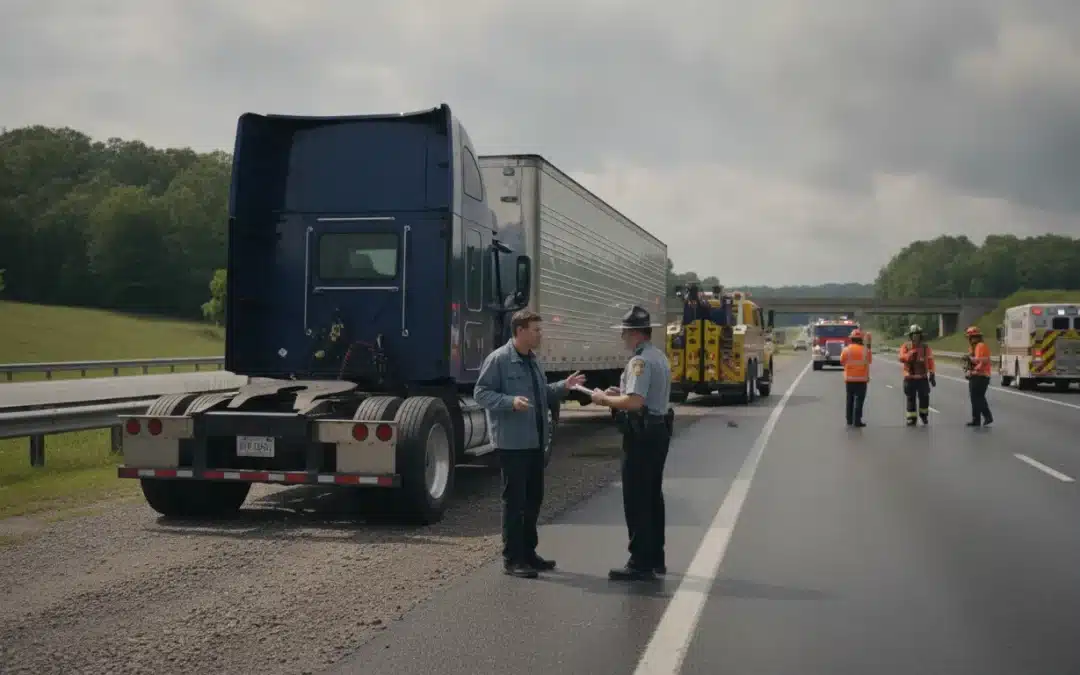
Knowing what to do after a truck accident can make the difference between protecting your rights and watching an insurance company or trucking carrier limit what you recover. When a commercial truck strikes your car, the first hour is about safety and medical care, but the first few days are about evidence and legal decisions. Because truck accidents are governed by federal regulations and involve corporations with investigation teams, the steps you take matter more than they do after a typical car crash. This guide walks through the immediate steps, the evidence that matters, how insurance works, and when to speak with an attorney.
A truck accident can be a terrifying, disorienting experience. Commercial trucks weigh up to 80,000 pounds, and the National Highway Traffic Safety Administration (NHTSA) reported that roughly 6,000 people died in crashes involving large trucks in a single recent year. If you or a family member were hurt, you are not alone, and the decisions you make now can shape the rest of your recovery.
Call 404-800-3060 now for a free, no-pressure case evaluation before you talk to any insurance company.
Why Truck Accidents Are Different
Truck accidents are not ordinary car accidents. A commercial trucking case involves multiple parties: the driver, the trucking carrier, and often the shipper or owner of the cargo. Each may have insurance coverage and a team of adjusters working to protect their own bottom line. A large truck company has the financial resources to investigate, gather evidence, and build a defense quickly.
Federal rules from the Federal Motor Carrier Safety Administration (FMCSA) govern how long a driver may be on the road, how trucks must be maintained, and what records carriers must keep. Electronic logging devices (ELDs) record a driver’s hours of service, and maintenance logs show whether a truck was kept safe. That data can prove liability, but it can also be overwritten or altered if it is not preserved quickly.
Because the stakes are higher and the evidence is fragile, the approach you take in the days after a crash matters. That is where this guide focuses: on concrete, practical steps you can take.
Immediately After the Crash: Your First Steps
The moments right after impact are about safety and preserving what happened. Here is what to do first.
1. Move to Safety and Call 911
If you are able to move and it is safe to do so, get away from traffic. Turn on your hazard lights and get to a safe location. Call 911 and report the crash, your location, whether anyone is injured, and any hazards on the road. A police officer will respond, secure the scene, and create a police report.
Do not leave the scene of an accident, even if the damage seems minor. Truck accidents almost always involve serious forces, and injuries may not be obvious right away.
2. Get Medical Care, Even If You Feel Fine
Adrenaline can mask pain and serious injuries. Whiplash, soft-tissue damage, traumatic brain injuries, and internal injuries may not show symptoms for hours or days. The safest choice is to be evaluated by a medical professional as soon as possible, whether at the scene, an emergency room, or an urgent care clinic.
Seeing a doctor is not just about your health. It also creates a medical record that connects your injuries to the accident, which is essential to any later claim.
3. Document Everything You Can
If it is safe, gather evidence at the scene:
- Take photos and videos of all vehicles, damage, skid marks, the area, and road conditions.
- Get the truck driver’s name, license plate, and insurance information.
- Write down the trucking company’s name and any markings or numbers on the truck.
- Collect the names and contact information of any witnesses.
- Note the time, date, location, and weather conditions.
Photograph everything carefully, including the truck’s license plate, the carrier’s name, and the tractor and trailer numbers. These details help an attorney identify the responsible companies later.
4. Talk to Police and Get the Report
Give the officer an accurate description of what happened. Stick to the facts, and do not guess about details you are unsure of. Do not admit fault or apologize, even out of politeness.
Ask how to get a copy of the police report and obtain it when it becomes available. Your attorney can request the crash report and additional documents for you.
Preserve Key Evidence in a Truck Accident
In a truck accident, critical evidence can disappear quickly. A carrier may repair or dispose of a truck, overwrite electronic data, or “correct” maintenance logs. That is why preserving evidence matters so much.
The most important types of evidence in a trucking case include:
- Electronic logging device (ELD) data, which records the driver’s hours of service and whether they violated federal limits by driving too long.
- Black box or event data recorder information, which captures speed, braking, and other data.
- Maintenance records, showing whether brakes, tires, or other systems were properly maintained.
- Dash camera footage, from both vehicles and nearby businesses.
- Drug and alcohol testing results, which carriers are required to obtain after certain crashes.
An attorney who understands trucking regulations knows what records to demand and how to send a legal request so data is not destroyed. Acting quickly to preserve that evidence is one of the most valuable things you can do.
Filing With Insurance Companies: Proceed With Caution
You should report the accident to your own insurance company, but be careful about what you say to the truck driver’s insurer or to the carrier’s claims team.
Insurance adjusters are trained to protect the company’s money. They may ask for a recorded statement, request a release, or try to get you to settle quickly for far less than your claim is worth. Trucking companies have their own investigators on the scene often within hours, gathering evidence that may be used against you.
Here are a few rules to keep in mind:
- Do not give a recorded statement to the other side’s insurer before talking to an attorney.
- Do not sign any documents or releases without legal review.
- Do not accept a quick settlement offer before you know the full extent of your injuries and medical costs.
- Do not post about the accident on social media, as it can be used against you.
How FMCSA Regulations Can Help Your Case
The FMCSA sets national safety rules for commercial trucks. These regulations cover how long a driver can be on the road, how much rest they must have, how trucks must be inspected and maintained, and what records carriers must keep.
When a driver or carrier violates these rules, it can be powerful evidence of negligence. For example, if a driver exceeded federal hours-of-service limits and then caused a crash, that violation shows the driver was fatigued and the carrier tolerated it. An attorney who handles trucking cases knows how to demand FMCSA records and match them against the facts of the crash.
These safety violations can also affect the value of a case, because evidence that a driver or company showed reckless disregard for safety may support stronger claims. Bethany Schneider, a former King & Spalding trial attorney, spent years working on the defense side of serious injury cases and knows exactly how carriers and their insurers defend these claims, and how to build the client’s case against them.
When Should You Call a Truck Accident Attorney?
You do not have to decide everything at the scene, but you should consider speaking with an attorney early, ideally before you talk to the trucking company’s insurer or give a recorded statement.
Consider reaching out to an attorney if:
- You were seriously injured or a family member was killed.
- You are not sure who was at fault or how many parties may be responsible.
- The insurance company is pressuring you to settle quickly or give a recorded statement.
- Your injuries may lead to long-term medical care or lost income.
- You want to make sure important evidence, like the truck’s data or maintenance records, is preserved.
An experienced trucking accident attorney in Georgia can investigate the crash, identify every potentially responsible party, and protect your legal rights from the start.
How a Trial-First Attorney Helps
Schneider Injury Law is an Atlanta-based boutique personal injury trial firm that fights exclusively for seriously injured people. The firm is led by Bethany L. Schneider, a former King & Spalding trial attorney who has tried more than forty trials and recoveries totaling more than $80 million since 2018.
Because Bethany spent years defending corporations and insurers, she knows the playbook they use to limit claims. That inside knowledge shapes how she builds a case: preserving the ELD data, pulling the maintenance records, and holding carriers accountable for safety violations. The firm is trial-first, not a settlement mill, and it handles cases with hands-on attention rather than passing clients to associates.
The firm serves clients throughout Atlanta and all of Georgia on a contingency basis, which means you pay no fee until we win. There are no upfront costs and no retainers. For a trucking case that turns on preserved evidence and strong advocacy, that is exactly the kind of representation you want in your corner.
Contact Schneider Injury Law for a free consultation or call 404-800-3060.
Frequently Asked Questions About Truck Accidents
What should I do first after a truck accident?
Move to safety if you can, call 911, seek medical care even if you feel fine, and document the scene with photos, witness information, and the truck’s details. Preserving evidence early protects your case.
Should I talk to the truck driver’s insurance company?
Be cautious. Their adjuster’s goal is to settle for as little as possible, and a recorded statement can be used against you. It is safer to speak with your own attorney before giving a statement, signing anything, or accepting a quick offer.
How long do truck accident cases take to resolve?
Every case is different. Trucking cases are complex because they involve multiple parties, corporate carriers, ELD data, and FMCSA regulations. A trial attorney can give you a realistic assessment after reviewing your case, but no attorney can promise a timeline or a guaranteed result.
Can the trucking company and the driver both be responsible?
Yes. Under federal regulations and Georgia law, the driver, the trucking carrier, and sometimes the shipper or cargo owner may share liability. An attorney investigates every potentially responsible party to seek the full value of your claim.
Your Next Step: A Free Consultation
After a truck accident, the evidence is fragile and the insurance teams are already working. The sooner you protect your rights, the stronger your position.
Schneider Injury Law offers a free, about-30-minute consultation, available remotely or in person. There is no pressure, and this first conversation is about education: helping you understand your options. Call 404-800-3060 or reach out through the contact page. You can also learn how safety violations can increase the value of a trucking case, or review what to do after an accident.
At Schneider Injury Law, all consultations are free. No retainers. No upfront fees. You pay nothing until we win.